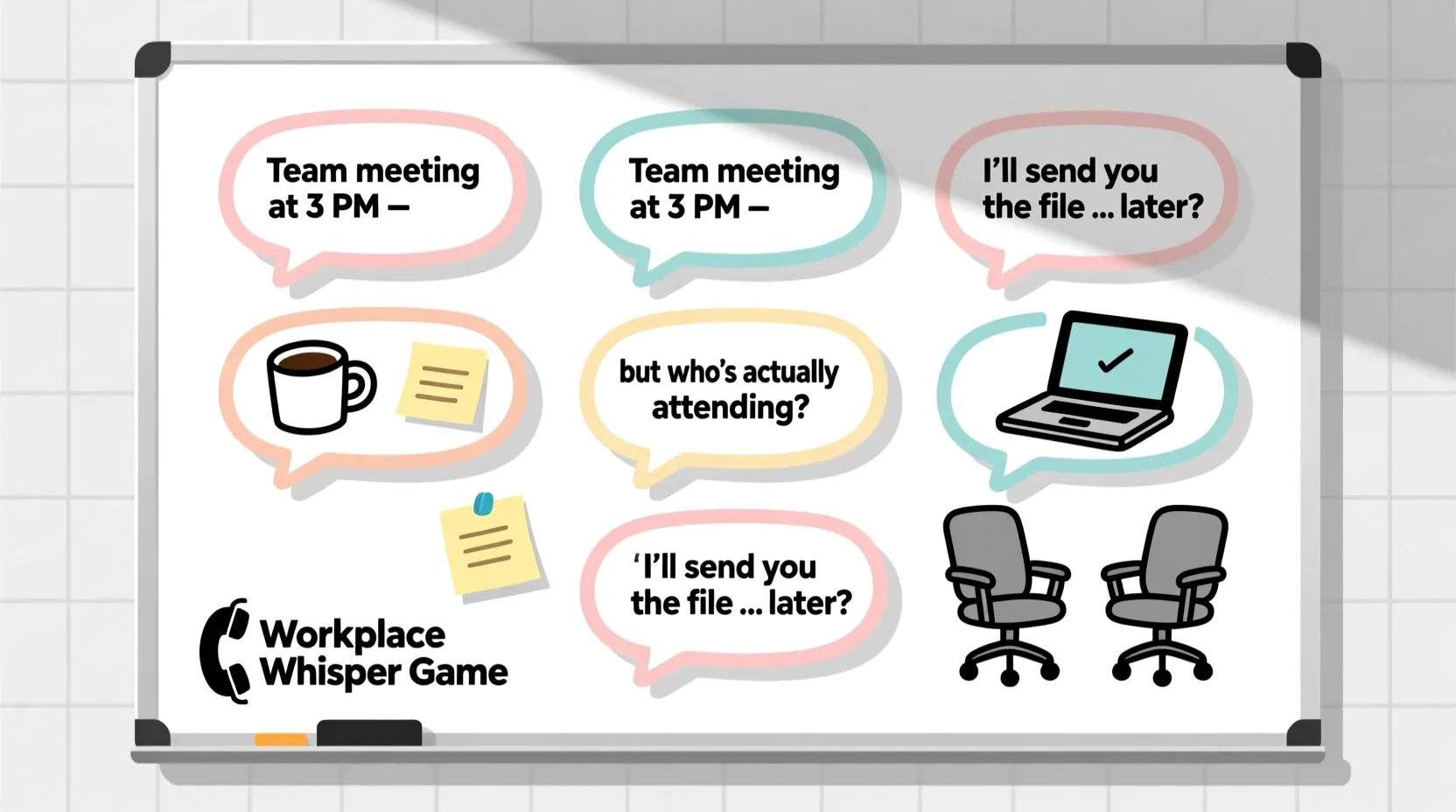
Have you ever played the telephone game as a kid?
Someone whispers a phrase, it moves down the line, and by the end, it becomes something funny and totally wrong. Now imagine that happening at work.
That’s where telephone game phrases for workplace come in.
These are short, simple, and powerful phrases that help you pass information clearly so messages don’t get mixed up, twisted, or lost along the way.
This guide gives you helpful categories, examples, and phrases you can start using today so your team stays aligned and confident.
Why It Matters: Why Telephone Game Phrases for Workplace Are So Important 💡
Clear communication is one of the strongest skills in any company.
When people misunderstand a task or repeat it incorrectly to someone else, the whole project can break.
That’s why telephone game phrases for workplace matter because they build clarity, reduce errors, and help everyone stay on the same page.
Or imagine a team working remotely.
Messages move through chat, email, and calls. Without clear language, tiny misunderstandings become big misses.
Using simple, repeatable phrases stops this problem. These phrases act like “anchors”—they keep the message steady. When everyone uses them, the workplace works smoother, faster, and with less stress.
Clear Instruction Phrases for Workplace 🔍
Confirm the Task
Explanation: Helps lock in the correct instructions before work begins.
Use When: You want to avoid confusion early on.
Example: “Just to confirm the task: You need the report summary by Friday at noon, correct?”
Here’s What Needs to Happen
Explanation: Organizes a message into clear steps.
Use When: You’re giving directions to someone busy or distracted.
Example: “Here’s what needs to happen: pull the numbers, update the chart, and send me the spreadsheet.”
Let Me Say That Another Way
Explanation: A gentle way to rephrase without sounding rude.
Use When: Someone looks confused or unsure.
Example: “Let me say that another way: We’re focusing on Q4 clients only, not the full list.”
The Main Point Is…
Explanation: Cuts through noise and highlights the most important part.
Use When: The conversation is getting long or unclear.
Example: “The main point is that the client wants changes before the meeting tomorrow.”
Clarifying and Checking Understanding 🧠
What I Heard You Say Is…
Explanation: A great phrase to confirm accuracy.
Use When: You’re afraid of missing a detail.
Example: “What I heard you say is that the shipment arrives Monday and must be checked by 3 PM.”
Can You Walk Me Through That?
Explanation: Helps uncover missing information.
Use When: Instructions sound incomplete.
Example: “Can you walk me through that? I want to be sure I follow every step.”
Just to Make Sure We’re Aligned
Explanation: Prevents misunderstanding between teams.
Use When: You’re coordinating a shared task.
Example: “Just to make sure we’re aligned, my team will handle the drafts and yours will handle final edits.”
Is This Correct?
Explanation: Simple and direct confirmation.
Use When: You’re double-checking message accuracy.
Example: “Is this correct? You want the budget reduced by 5%, not 10%.”
Collaboration and Team Sync Phrases 🤝
Who’s Owning This?
Explanation: Clears up responsibility.
Use When: Several people are involved.
Example: “Who’s owning this? I want to make sure nothing falls through.”
Let’s Break This Down
Explanation: Simplifies complex tasks.
Use When: A project seems messy or overwhelming.
Example: “Let’s break this down into parts so each person knows their piece.”
Here’s What I Need From You
Explanation: Direct and clear request.
Use When: Delegating tasks.
Example: “Here’s what I need from you: update the file and send it by the end of the day.”
Let’s Confirm Next Steps
Explanation: Makes sure everyone leaves the meeting knowing what to do.
Use When: Finishing a conversation or call.
Example: “Let’s confirm next steps: you’ll send the draft, and I’ll review tonight.”
Alignment and Consistency Phrases 🎯
Let’s Stay With the Plan
Explanation: Keeps focus during team talks.
Use When: The conversation drifts off-topic.
Example: “Let’s stay with the plan and finish the timeline before we discuss new ideas.”
For Consistency’s Sake
Explanation: Supports standard processes.
Use When: Teams handle tasks differently.
Example: “For consistency’s sake, let’s all use the same naming format for files.”
Let’s Stick With the Original Message
Explanation: Ensures the message doesn’t get altered.
Use When: People start changing details.
Example: “Let’s stick with the original message so everyone stays aligned.”
Here’s the Exact Wording to Use
Explanation: Stops mixed phrasing or accidental misquotes.
Use When: Sharing instructions with large teams.
Example: “Here’s the exact wording to use when emailing the client.”
Conflict and Miscommunication Prevention Phrases 🛑
Before This Becomes a Mix-Up…
Explanation: Early warning phrase to prevent confusion.
Use When: You sense misunderstandings forming.
Example: “Before this becomes a mix-up, let’s review the task again.”
Let’s Clear This Up Now
Explanation: Fixes miscommunication quickly.
Use When: Someone repeats wrong information.
Example: “Let’s clear this up now so we don’t send incorrect details.”
That’s Not Quite What I Meant
Explanation: Corrects gently.
Use When: Someone repeated your words incorrectly.
Example: “That’s not quite what I meant—I meant the smaller file, not the full version.”
Here’s the Accurate Information
Explanation: Provides the correct message directly.
Use When: The wrong message is spreading.
Example: “Here’s the accurate information: the meeting is at 2 PM, not 3 PM.”
Polite Repetition and Reinforcement Phrases 🔁
Just to Repeat
Explanation: Repeats key points with clarity.
Use When: You want the message to stick.
Example: “Just to repeat: send the slides by 10 AM.”
Let Me Say That Again Clearly
Explanation: Helps with strong emphasis.
Use When: The message is important or sensitive.
Example: “Let me say that again clearly: no files should be shared outside our team.”
Sharing This One More Time
Explanation: Friendly way to reinforce a message.
Use When: People missed previous updates.
Example: “Sharing this one more time so no one misses the link.”
Here’s the Key Point Again
Explanation: Great for fast-moving teams.
Use When: People need a second reminder.
Example: “Here’s the key point again: our focus is customer renewals this week.”
Remote Work and Digital Communication Phrases 🌐
Let’s Put This in Writing
Explanation: Protects against misheard messages.
Use When: Calls feel rushed.
Example: “Let’s put this in writing so we all have the same reference.”
Dropping This Here for Clarity
Explanation: Supports shared understanding in chat.
Use When: You want to make details easy to find.
Example: “Dropping this here for clarity—here’s the final checklist.”
Here’s the Final Version
Explanation: Helps teams know which file is correct.
Use When: Multiple drafts are floating around.
Example: “Here’s the final version so everyone uses the same document.”
Let Me Summarize in One Line
Explanation: Keeps digital messages short.
Use When: Long threads cause confusion.
Example: “Let me summarize in one line: we ship tomorrow morning.”
Bonus Recap Table 📘
| Category | Phrase Example | Use Case |
| Clear Instruction | “The main point is…” | Highlighting key tasks |
| Clarifying | “What I heard you say is…” | Confirming details |
| Collaboration | “Let’s confirm next steps” | Ending meetings well |
| Alignment | “For consistency’s sake…” | Keeping teams unified |
| Conflict Prevention | “Let’s clear this up now” | Fixing early confusion |
| Repetition | “Just to repeat…” | Reinforcing messages |
| Remote Work | “Let’s put this in writing” | Digital confirmation |
Final Thoughts
Clear communication builds strong teams. When messages move from person to person, they often change without anyone noticing.
Using telephone game phrases for workplace makes your message stronger, cleaner, and easier for everyone to repeat correctly.
These phrases cut through noise, prevent mistakes, and help teams work better no matter where they are.

QuicklyReply helps you master real-life communication with ready-to-use English phrases for work, travel, and daily life—perfect for teachers, learners, and professionals seeking quick, natural expressions.
Leave a Reply