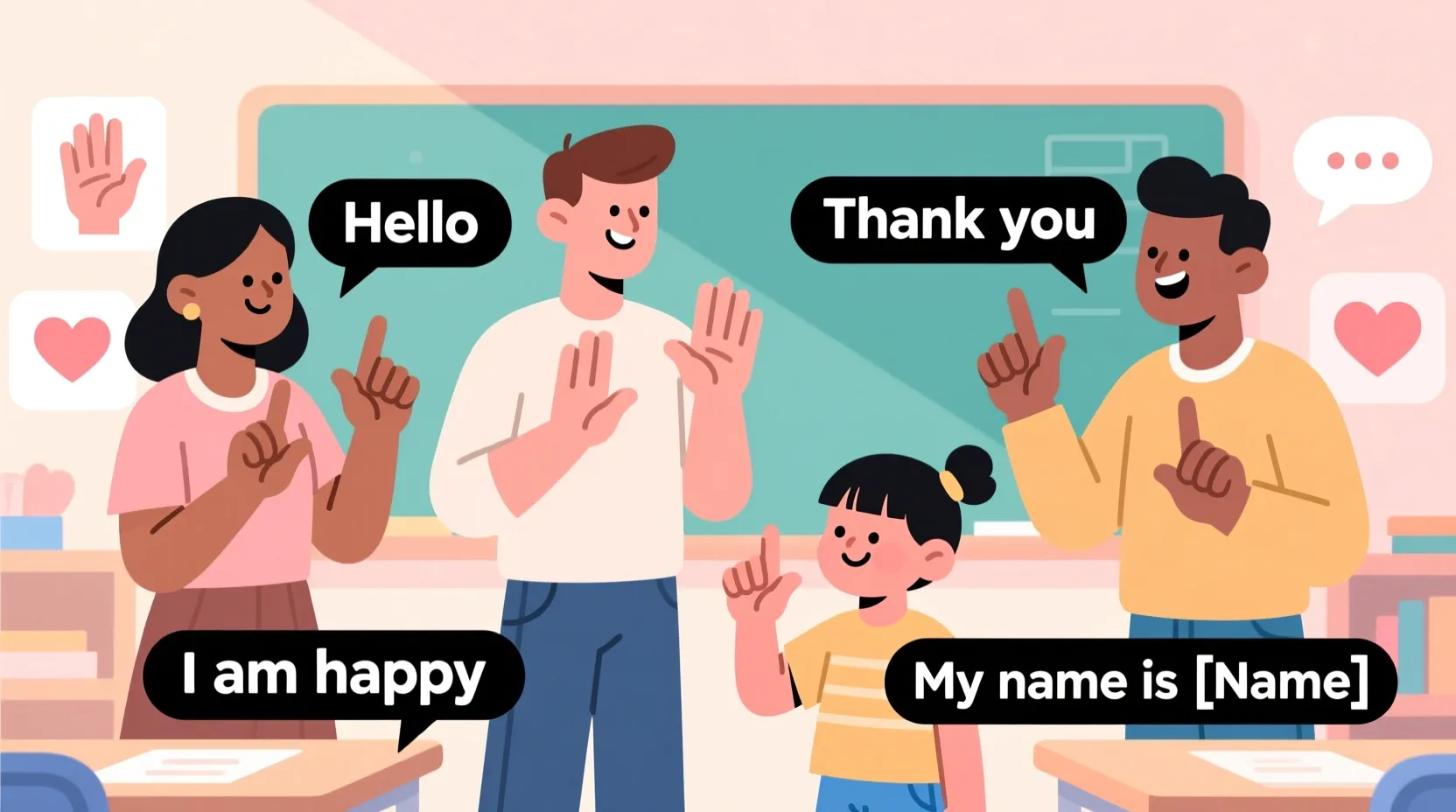
Learning sign language phrases for beginners opens a new world of connection, kindness, and communication.
For many people, sign language feels mysterious at first silent, graceful, and full of meaning. But once you take the first step, you discover that it’s simple, clear, and very rewarding.
Sign language isn’t just a tool. It’s a bridge. It helps break down barriers between hearing and non-hearing communities.
When you learn beginner-friendly signs, you become someone who can help others feel seen, heard, and understood. That is powerful.
This guide gives you the most helpful sign language phrases for beginners, explained in easy categories.
You’ll learn greetings, everyday basics, polite expressions, feelings, questions, and more.
Each phrase also includes a “Use When” tip and a simple example. By the end, you’ll feel ready to start signing with confidence.
Why Sign Language Phrases for Beginners Matter 💡
Learning sign language phrases for beginners is important for many reasons. First, sign language is a full, rich visual language used every day by Deaf communities.
When you learn even simple signs, you open the door to more inclusive conversations. It shows respect. It shows effort. And it shows heart.
Second, you might meet people in your daily life who rely on or prefer sign language.
It’s a practical tool even for hearing people.
From building friendships to showing kindness, sign language phrases for beginners help you create better communication in a world where everyone deserves to be understood.
Basic Greetings in Sign Language for Beginners 👋
Hello
A simple, friendly greeting used to start any conversation.
Use When: You meet someone or want to get someone’s attention.
Example: You see a friend across the room and sign Hello with a smile.
Good Morning
A polite greeting to start the day kindly.
Use When: Saying hello to someone before noon.
Example: You greet your coworker with Good Morning during a team meeting.
Good Afternoon
A warm sign for mid-day greetings.
Use When: Meeting someone in the afternoon hours.
Example: You walk into a store and sign Good Afternoon to the staff.
Good Night
A calm and gentle farewell.
Use When: Ending your day or saying goodbye at night.
Example: You sign Good Night to a friend after a late hangout.
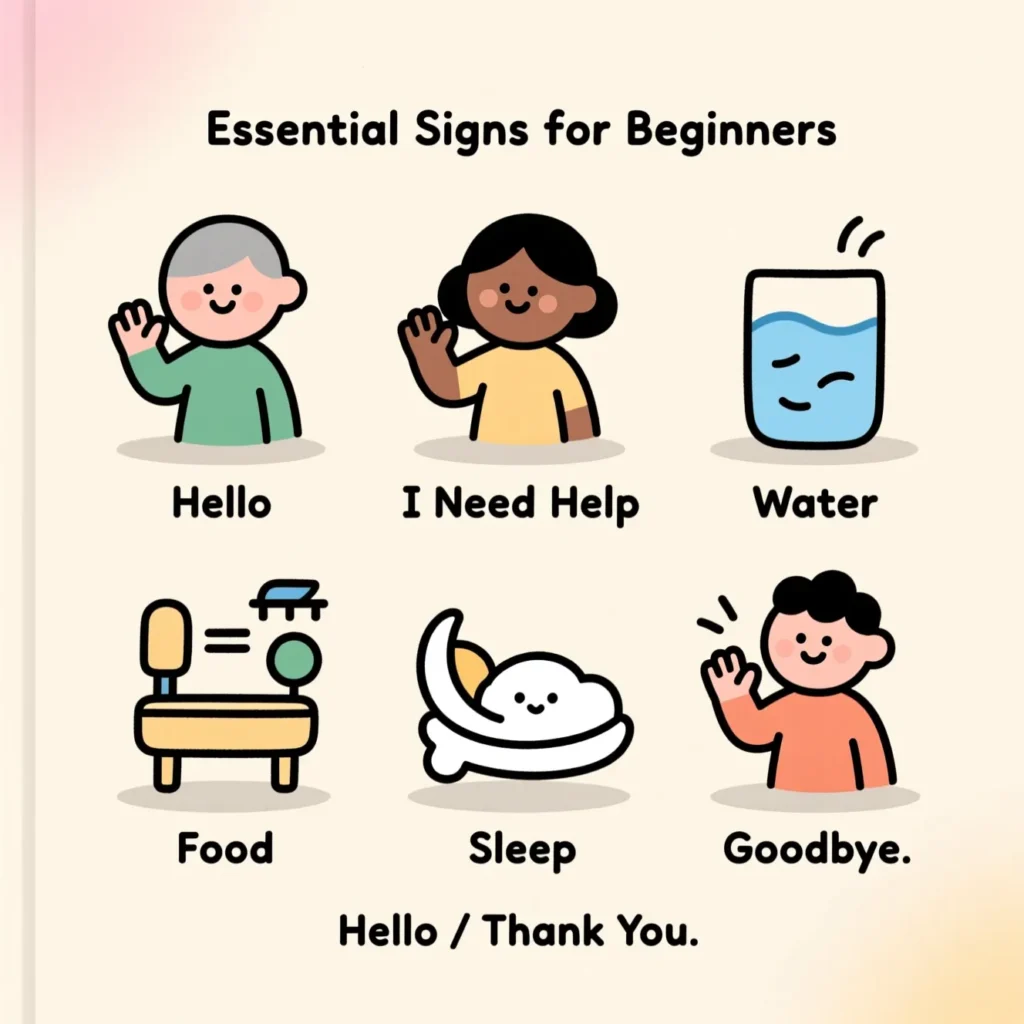
Everyday Essential Signs for Beginners 🏠
Yes
A simple nod-like sign that shows agreement.
Use When: You want to confirm or agree with someone.
Example: A friend asks if you want coffee—you sign Yes.
No
Clear and straightforward, like a head shake.
Use When: You need to refuse politely.
Example: Someone offers you a snack you don’t want, and you sign No.
Please
A polite sign that adds kindness to any request.
Use When: Asking for help, food, or information.
Example: You sign Please to ask someone for directions.
Thank You
A warm, gentle expression of gratitude.
Use When: Someone gives you help or kindness.
Example: You sign Thank You when someone opens the door for you.
Useful Question Phrases for Beginners ❓
Who?
A basic WH-question sign.
Use When: Asking about a person or identity.
Example: You sign Who? when meeting someone new and want to know their name.
What?
A broad question sign used in many situations.
Use When: Asking for explanations or details.
Example: You sign What? when someone shows you a new object.
Where?
A directional question sign.
Use When: Asking for locations or directions.
Example: You sign Where? when looking for a restroom.
Why?
A sign used to understand reasons or motives.
Use When: Seeking explanations.
Example: You sign Why? when a friend seems upset.
Polite and Social Expressions for Beginners 🤝
Sorry
A gentle sign used to show apology.
Use When: You bump into someone or make a small mistake.
Example: You sign Sorry after accidentally stepping on someone’s shoe.
Excuse Me
A polite phrase used to get someone’s attention.
Use When: Passing by or needing help.
Example: You sign Excuse Me to ask someone to repeat something.
I Don’t Understand
A very common beginner phrase.
Use When: You need more clarity.
Example: You sign I Don’t Understand during a conversation when something is unclear.
Help
A vital and supportive sign.
Use When: Asking for assistance or offering it.
Example: You sign Help when you can’t reach something on a high shelf.
Feelings and Emotions in Sign Language for Beginners ❤️
Happy
A cheerful and uplifting sign.
Use When: Expressing joy.
Example: You sign Happy when sharing good news.
Sad
A simple movement showing emotion.
Use When: Expressing sorrow or empathy.
Example: You sign Sad when talking about a difficult day.
Tired
A sign that shows low energy.
Use When: Explaining you need rest.
Example: You sign Tired after a long shift.
Excited
A lively sign full of energy.
Use When: Sharing joyful anticipation.
Example: You sign Excited when talking about an upcoming celebration.
Practical Daily Life Phrases for Beginners 🛒
Eat
A sign used often in everyday conversations.
Use When: Asking about meals.
Example: You sign Eat to ask someone if they want lunch.
Drink
Another helpful and frequent sign.
Use When: Talking about beverages.
Example: You sign Drink when asking for water.
Bathroom
A must-know sign for beginners.
Use When: Asking for directions or telling others where you’re going.
Example: You sign Bathroom in a crowded place where speaking is difficult.
Stop
A strong and clear sign.
Use When: Warning someone or stopping an action.
Example: You sign Stop when someone is about to walk into danger.
Conversation Starters for Beginners 🗣️
My Name Is…
A basic introduction sign.
Use When: Starting conversations with new people.
Example: You sign My Name Is followed by finger-spelling your name.
Nice to Meet You
A friendly and polite phrase.
Use When: Greeting someone new.
Example: You sign Nice to Meet You during an introduction.
How Are You?
A caring and simple question.
Use When: Checking in with friends or strangers.
Example: You sign How Are You? to start a warm chat.
Where Are You From?
A great beginner conversation starter.
Use When: Meeting new people.
Example: You sign Where Are You From? during small talk.
Bonus Recap Table (Optional)
| Category | Phrase | Use When | Example |
|---|---|---|---|
| Greetings | Hello | Starting conversation | Greeting a friend |
| Basics | Thank You | Showing gratitude | After receiving help |
| Questions | Where? | Asking for directions | Looking for restroom |
| Polite Signs | Sorry | Apologizing | After bumping into someone |
| Emotions | Happy | Expressing joy | Sharing good news |
| Daily Life | Drink | Talking about beverages | Asking for water |
| Conversation | My Name Is | Introducing yourself | Meeting someone new |
Final Thoughts
Learning sign language phrases for beginners is a kind and thoughtful step toward better communication.
You don’t need to be fluent to make someone feel welcomed. Even basic signs like Hello, Thank You, or Help can make a big difference in someone’s day.
Take your time. Practice slowly. Use signs in real life. The more you use them, the easier they feel. And remember, communication is not only about words it’s about connection.

At QuickReply.com, speed meets smart communication! Instantly craft perfect replies, boost engagement, and save time. Your go-to hub for quick, witty, and professional message responses anytime!
Leave a Reply