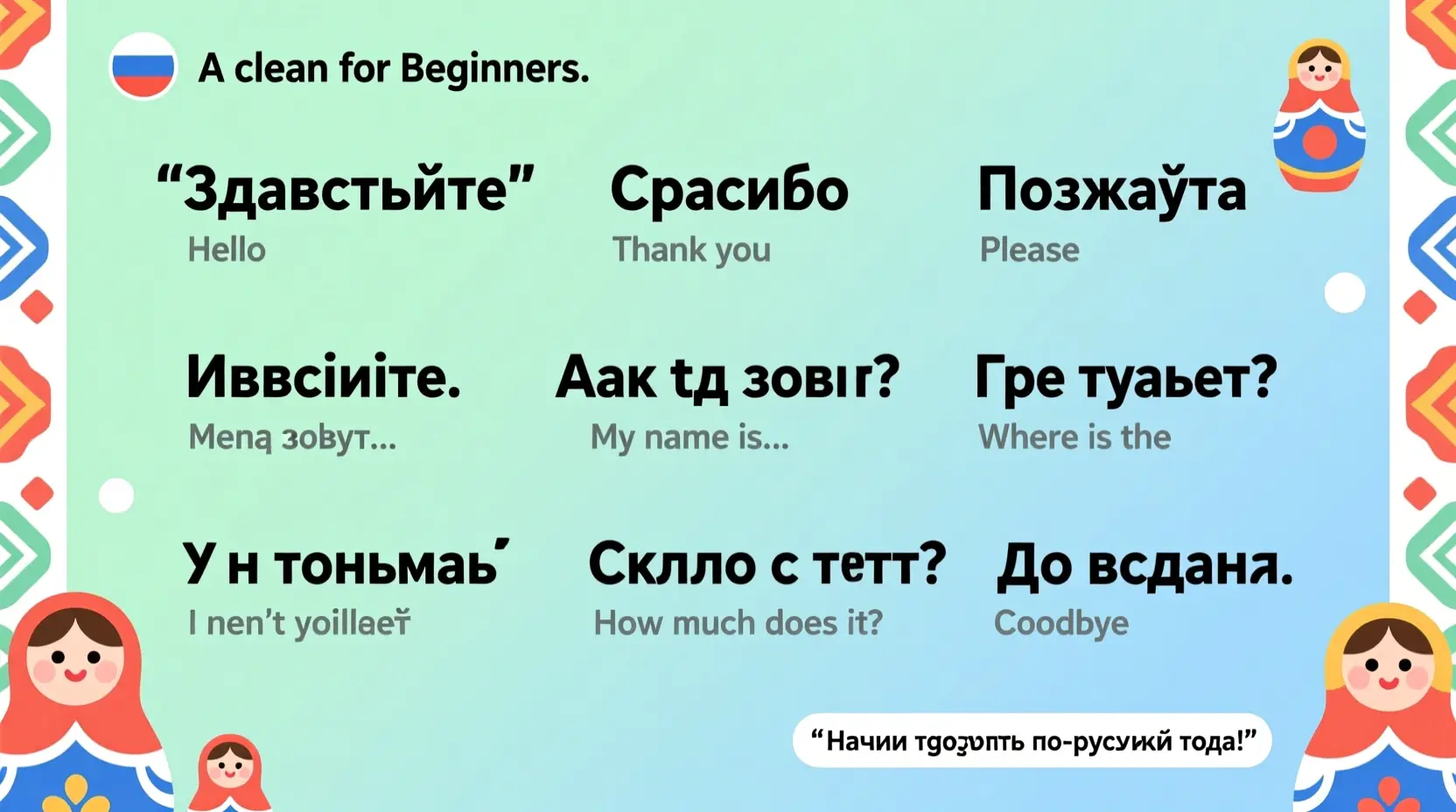
Learning russian phrases for beginners can feel like opening the door to a whole new world.
Russian is one of the most widely spoken languages on the planet, full of history, depth, and charm.
For many people, learning it may seem difficult at first especially with a different alphabet and unfamiliar sounds.
But the truth is simple: you don’t need to master the entire language to start speaking confidently.
This guide breaks everything down in a friendly, easy way.
You’ll learn helpful categories, real examples, and moments when each phrase is useful. By the end, you’ll feel ready to use Russian in real life one phrase at a time.
Why It Matters
Understanding russian phrases for beginners gives you instant confidence.
You don’t need long sentences; just short, simple words can help you order food, ask for directions, greet people, or show politeness.
Or maybe you’re learning Russian for school or online conversations.
These simple Russian words will help you build strong foundations before moving to longer grammar rules.
Knowing these phrases also shows respect. Locals appreciate when a visitor tries even a little.
And that effort often leads to kindness, help, and warm connections.
Everyday Greetings and Basics 😊

Learning simple greetings helps you connect right away. These are the first russian phrases for beginners most learners memorize.
Privet — Hello
A friendly, casual greeting used with people your age or people you know.
Use When: Meeting someone informally.
Example: Privet! Kak dela? (Hi! How are you?)
Zdravstvuyte — Hello (Formal)
A polite greeting for strangers, elders, or official places.
Use When: Entering a shop or speaking with staff.
Example: Zdravstvuyte, u vas est’ menyu? (Hello, do you have a menu?)
Spasibo — Thank you
Shows kindness and respect in any situation.
Use When: Someone helps you or gives you something.
Example: Spasibo za pomoshch. (Thank you for the help.)
Pozhaluysta — Please / You’re welcome
One word with two common uses.
Use When: Asking politely or replying to “thank you.”
Example: Chai, pozhaluysta. (Tea, please.)
Phrases for Asking Questions ❓
Questions help you explore, learn, and get information when you need it.
Gde…? — Where…?
The easiest way to ask for directions.
Use When: Trying to find places.
Example: Gde metro? (Where is the metro?)
Skol’ko eto stoit? — How much does this cost?
Great for shopping and markets.
Use When: Buying souvenirs or food.
Example: Skol’ko eto stoit? (How much is this?)
Kak? — How?
Short and useful for clarifying instructions.
Use When: Learning how to do something.
Example: Kak eto rabotayet? (How does this work?)
Chto eto? — What is this?
Perfect for curious beginners.
Use When: Trying new foods or products.
Example: Chto eto? (What is this?)
Travel and Transportation Phrases 🚆✈️
These russian phrases for beginners are very helpful during trips.
Mne nuzhno… — I need…
Useful when asking for essentials.
Use When: Requesting help or services.
Example: Mne nuzhno taksi. (I need a taxi.)
Ya ishchu… — I am looking for…
Great for navigating cities.
Use When: Finding stations or buildings.
Example: Ya ishchu vokzal. (I am looking for the train station.)
Kuda idet avtobus? — Where does this bus go?
Helps avoid getting lost.
Use When: Boarding public transport.
Example: Kuda idet avtobus? (Where is this bus going?)
Mozhno bilety? — Tickets, please?
A quick phrase to buy tickets anywhere.
Use When: At stations, museums, or events.
Example: Mozhno bilety v muzei? (Tickets to the museum, please?)
Shopping and Eating Out 🛍️🍽️
These are some of the most practical basic Russian phrases you’ll use.
Ya hochu… — I want…
Short and simple for ordering food.
Use When: In restaurants or cafés.
Example: Ya hochu kofe. (I want coffee.)
Est’ menyu na angliyskom? — Do you have a menu in English?
Very helpful for beginners.
Use When: You need translation support.
Example: Asking at a restaurant.
Mozhno…? — Can I have…?
A polite way to request items.
Use When: Ordering or buying things.
Example: Mozhno vodu? (Can I have water?)
U vas est’…? — Do you have…?
Great for checking availability.
Use When: Shopping or dining.
Example: U vas est’ vegetarianskoe blyudo? (Do you have a vegetarian dish?)
Polite and Helpful Phrases 🤝

Using polite expressions shows respect and makes communication smoother.
Izvinite — Excuse me / Sorry
Sounds soft and polite.
Use When: Getting someone’s attention or apologizing.
Example: Izvinite, gde tualet? (Excuse me, where is the restroom?)
Ne ponimayu — I don’t understand
A must-know for beginners.
Use When: Struggling with fast Russian speech.
Example: Izvinite, ya ne ponimayu. (Sorry, I don’t understand.)
Povtorite, pozhaluysta — Repeat, please
Helps you learn faster.
Use When: Asking someone to repeat.
Example: Povtorite, pozhaluysta. (Repeat, please.)
Medlennee, pozhaluysta — Slower, please
Perfect for beginners.
Use When: You want someone to speak more slowly.
Example: Govorte medlennee, pozhaluysta. (Speak slower, please.)
Emergency and Help Phrases 🚨
It’s always good to know safety-related simple Russian words.
Pomogite! — Help!
A strong and useful phrase.
Use When: In emergencies.
Example: Shout or say calmly when needed.
Pozovite politsiyu — Call the police
Important in unsafe situations.
Use When: Reporting trouble.
Example: Pozovite politsiyu, pozhaluysta. (Call the police, please.)
Mne plokho — I feel sick
Useful for health emergencies.
Use When: Feeling unwell.
Example: Mne plokho, nuzhna pomoshch. (I feel sick, I need help.)
Gde bolnitsa? — Where is the hospital?
Essential during travel.
Use When: Medical situations.
Example: Asking staff or locals.
Social and Friendly Phrases 💬
These help you sound warm and friendly, even as a beginner.
Kak vas zovut? — What is your name?
Great for making new friends.
Use When: Meeting people.
Example: Kak vas zovut? (What’s your name?)
Ochen’ priyatno — Nice to meet you
A polite follow-up.
Use When: After introductions.
Example: Ochen’ priyatno! (Nice to meet you!)
Kak dela? — How are you?
Simple and friendly.
Use When: Starting a conversation.
Example: Kak dela? (How are you?)
Khorosho — Good
A quick response.
Use When: Someone asks how you are.
Example: Khorosho, spasibo. (Good, thank you.)
Bonus Recap Table ✔️
| Category | Phrase | Meaning | Example |
|---|---|---|---|
| Greetings | Privet | Hello | Privet! Kak dela? |
| Questions | Gde…? | Where…? | Gde metro? |
| Travel | Mne nuzhno… | I need… | Mne nuzhno taksi. |
| Shopping | Ya hochu… | I want… | Ya hochu kofe. |
| Politeness | Spasibo | Thank you | Spasibo bolshoe! |
| Emergency | Pomogite | Help | Pomogite, pozhaluysta! |
| Social | Kak vas zovut? | What’s your name? | Kak vas zovut? |
Final Thoughts
Learning russian phrases for beginners doesn’t have to be hard.
Small steps make a big difference. You don’t need to memorize long grammar rules at first.
Just focus on short, powerful phrases that help you in daily life greetings, travel basics, polite words, and simple questions.

Leave a Reply