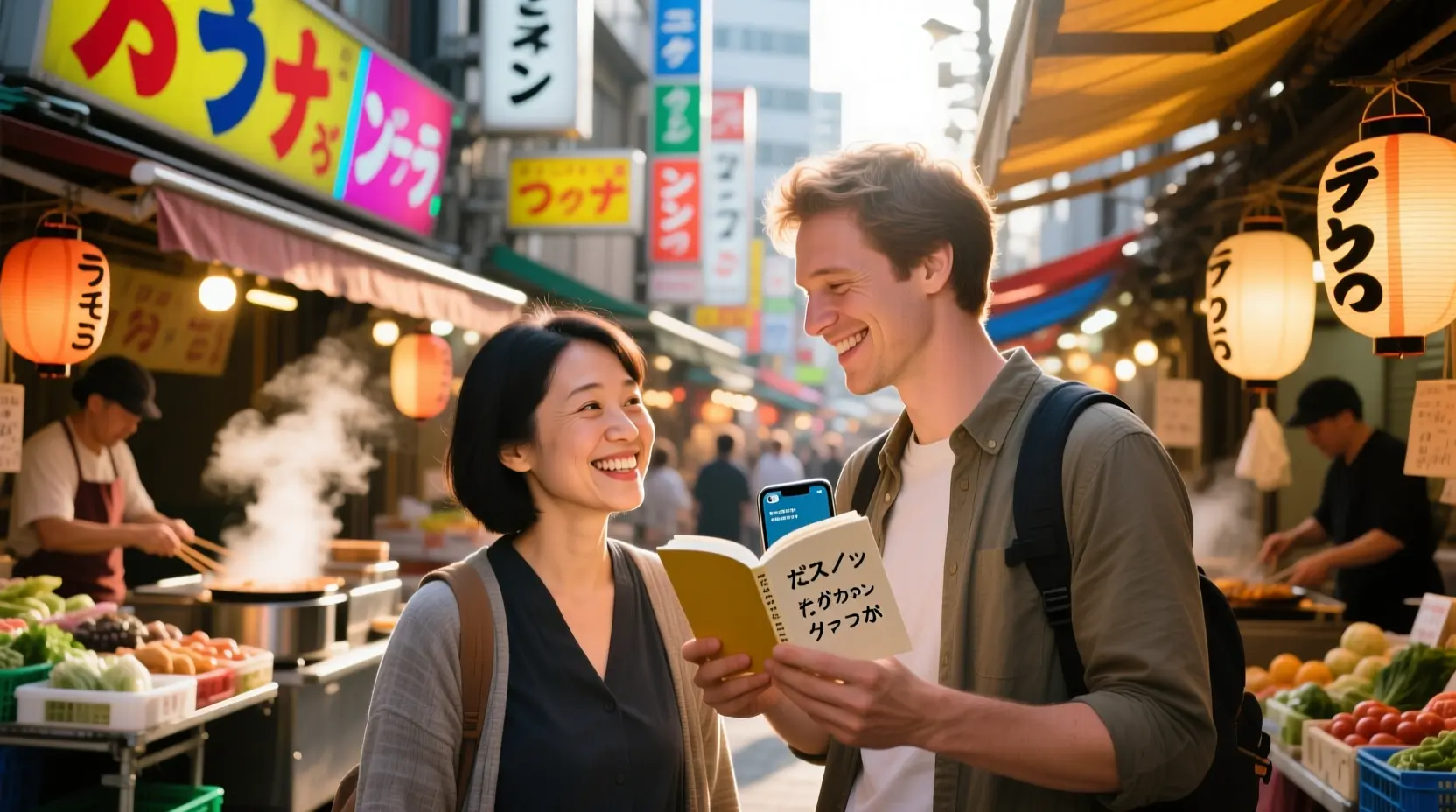
Planning a trip to Japan? ✈️ Learning must know Japanese phrases for travel can make your journey smoother and more enjoyable.
Even though English is common in big cities, a few polite Japanese words can open doors, earn smiles, and show respect.
These phrases help you order food, ask for directions, and connect with locals even if your Japanese is limited.
Japanese people truly appreciate when visitors make an effort to speak their language.
You don’t need to be fluent just knowing simple expressions like arigatou gozaimasu or sumimasen can make a huge difference.
In this guide, you’ll find the most useful travel phrases grouped by real-life situations.
From greeting others to getting around or eating out, these are the words that will help you travel confidently through Japan.
🌸 Why Must Know Japanese Phrases for Travel Matter
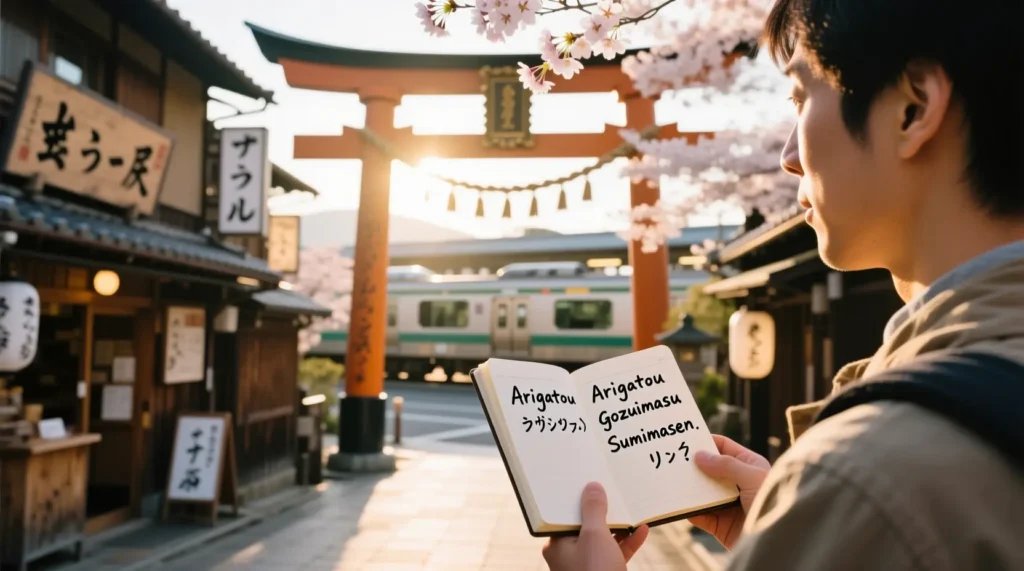
When you visit Japan, communication can be a little tricky signs might not always be in English, and not everyone speaks it fluently.
That’s where must know Japanese phrases for travel become your best travel companion.
Imagine you’re lost in Tokyo’s Shinjuku Station, one of the busiest in the world. Knowing how to ask, “Eki wa doko desu ka?” instantly reduces stress.
Or, when you’re in a small Kyoto restaurant, greeting the owner with “Konnichiwa!” shows warmth and respect.
Using simple Japanese phrases helps you:
- Build trust and positive connections with locals
- Navigate daily situations like transportation or dining
- Show appreciation for Japanese culture
👋 Greetings & Basic Politeness
Konnichiwa (こんにちは) – Hello
Explanation: A common way to say hello during the day.
Use When: Greeting someone politely or starting a conversation.
Example: Konnichiwa! Watashi wa Sam desu. (Hello! I’m Sam.)
Ohayou gozaimasu (おはようございます) – Good morning
Explanation: Used in the morning as a polite greeting.
Use When: Meeting people before noon.
Example: Ohayou gozaimasu! Genki desu ka? (Good morning! How are you?)
Arigatou gozaimasu (ありがとうございます) – Thank you very much
Explanation: A polite way to show gratitude.
Use When: After receiving help, food, or directions.
Example: Arigatou gozaimasu! (Thank you very much!)
Sumimasen (すみません) – Excuse me / I’m sorry
Explanation: Works for both apologizing and getting attention.
Use When: Asking for help or saying sorry politely.
Example: Sumimasen, eki wa doko desu ka? (Excuse me, where is the station?)
🍣 Dining & Ordering Food
Itadakimasu (いただきます) – Let’s eat / Thank you for the meal
Explanation: Said before eating to express gratitude.
Use When: Before starting a meal.
Example: Itadakimasu! (Let’s eat!)
Gochisousama deshita (ごちそうさまでした) – Thank you for the meal
Explanation: Said after eating, to thank the cook.
Use When: Leaving a restaurant or finishing food.
Example: Gochisousama deshita, oishikatta desu! (Thank you, it was delicious!)
Mizu kudasai (水ください) – Water please
Explanation: A polite way to ask for water.
Use When: Requesting water at a restaurant.
Example: Mizu kudasai. (Please give me water.)
Okanjou onegaishimasu (お勘定お願いします) – The check, please
Explanation: Used to ask for your bill.
Use When: You’re ready to pay.
Example: Okanjou onegaishimasu. (Please bring the check.)
🗾 Getting Around & Transportation
Eki wa doko desu ka? (駅はどこですか?) – Where is the station?
Explanation: A must-know for navigation.
Use When: Asking for train or subway directions.
Example: Sumimasen, eki wa doko desu ka? (Excuse me, where is the station?)
Kono densha wa Tokyo ni ikimasu ka? (この電車は東京に行きますか?) – Does this train go to Tokyo?
Explanation: Useful for checking travel routes.
Use When: Before boarding a train.
Example: Kono densha wa Tokyo ni ikimasu ka? (Does this train go to Tokyo?)
Ikura desu ka? (いくらですか?) – How much is it?
Explanation: For checking prices on tickets or items.
Use When: Paying for transportation or shopping.
Example: Kippu wa ikura desu ka? (How much is the ticket?)
Tomatte kudasai (止まってください) – Please stop
Explanation: Useful when riding taxis or buses.
Use When: Asking to stop at a specific place.
Example: Koko de tomatte kudasai. (Please stop here.)
🏨 Hotel & Accommodation
Yoyaku shiteimasu (予約しています) – I have a reservation
Explanation: Helps check in smoothly at hotels.
Use When: Arriving at your hotel.
Example: Yoyaku shiteimasu. Sam desu. (I have a reservation. I’m Sam.)
Kagi wa doko desu ka? (鍵はどこですか?) – Where is the key?
Explanation: Handy for asking about room access.
Use When: Collecting room keys.
Example: Kagi wa doko desu ka? (Where is the key?)
Check out wa nanji desu ka? (チェックアウトは何時ですか?) – What time is checkout?
Explanation: Common question when leaving.
Use When: The day before or during checkout.
Example: Check out wa nanji desu ka? (What time is checkout?)
Wi-Fi wa arimasu ka? (Wi-Fiはありますか?) – Is there Wi-Fi?
Explanation: To check if Wi-Fi is available.
Use When: Staying at hotels or cafes.
Example: Wi-Fi wa arimasu ka? (Is there Wi-Fi?)
🛍️ Shopping & Souvenirs
Kore wa nan desu ka? (これは何ですか?) – What is this?
Explanation: Ask about unfamiliar items.
Use When: Shopping or exploring markets.
Example: Kore wa nan desu ka? (What is this?)
Mite mo ii desu ka? (見てもいいですか?) – May I look?
Explanation: Shows politeness when browsing.
Use When: Before touching or examining something.
Example: Mite mo ii desu ka? (May I take a look?)
Takai desu ne! (高いですね!) – It’s expensive!
Explanation: A friendly way to react to high prices.
Use When: When negotiating or joking with shopkeepers.
Example: Takai desu ne! Sukoshi yasuku dekimasu ka? (It’s expensive! Can it be cheaper?)
Kore kudasai (これください) – I’ll take this
Explanation: To purchase an item.
Use When: Buying something in a shop.
Example: Kore kudasai. (I’ll take this one.)
🚑 Emergencies & Health
Tasukete! (助けて!) – Help!
Explanation: Use in emergencies.
Use When: You need immediate assistance.
Example: Tasukete! Watashi wa mayotta! (Help! I’m lost!)
Byouin wa doko desu ka? (病院はどこですか?) – Where is the hospital?
Explanation: For finding medical help.
Use When: Someone is sick or injured.
Example: Sumimasen, byouin wa doko desu ka? (Excuse me, where is the hospital?)
Kega shimashita (けがしました) – I got injured
Explanation: To inform someone about your condition.
Use When: Speaking with staff or doctors.
Example: Kega shimashita, tasukete kudasai. (I got injured, please help.)
🏯 Sightseeing & Local Interaction
Shashin totte mo ii desu ka? (写真撮ってもいいですか?) – Can I take a picture?
Explanation: Always ask before taking photos.
Use When: Visiting temples, shrines, or shops.
Example: Shashin totte mo ii desu ka? (May I take a photo?)
Kirei desu ne! (きれいですね!) – It’s beautiful!
Explanation: Compliment places or people politely.
Use When: Admiring scenery or art.
Example: Kirei desu ne! (It’s beautiful!)
Doko ni ikeba ii desu ka? (どこに行けばいいですか?) – Where should I go?
Explanation: Great for asking locals about spots.
Use When: Looking for sightseeing advice.
Example: Osusume no basho wa doko desu ka? (What place do you recommend?)
🎌 Bonus Recap Table
| Category | Phrase | Meaning | Use When | Example |
|---|---|---|---|---|
| Greetings | Konnichiwa | Hello | Meeting someone | Konnichiwa! |
| Dining | Itadakimasu | Let’s eat | Before meals | Itadakimasu! |
| Transport | Eki wa doko desu ka? | Where is the station? | Getting directions | Sumimasen, eki wa doko desu ka? |
| Hotel | Yoyaku shiteimasu | I have a reservation | Checking in | Yoyaku shiteimasu. |
| Shopping | Kore kudasai | I’ll take this | Buying something | Kore kudasai. |
| Emergency | Tasukete! | Help! | In danger | Tasukete! |
| Sightseeing | Shashin totte mo ii desu ka? | Can I take a photo? | At landmarks | Shashin totte mo ii desu ka? |
✈️ Final Thoughts
Traveling to Japan becomes much easier when you know these must know Japanese phrases for travel.
You don’t need perfect pronunciation locals appreciate any effort to speak their language.
If you’re greeting someone with a smile, ordering delicious ramen, or asking for directions, these expressions help you feel more confident and connected.

Leave a Reply