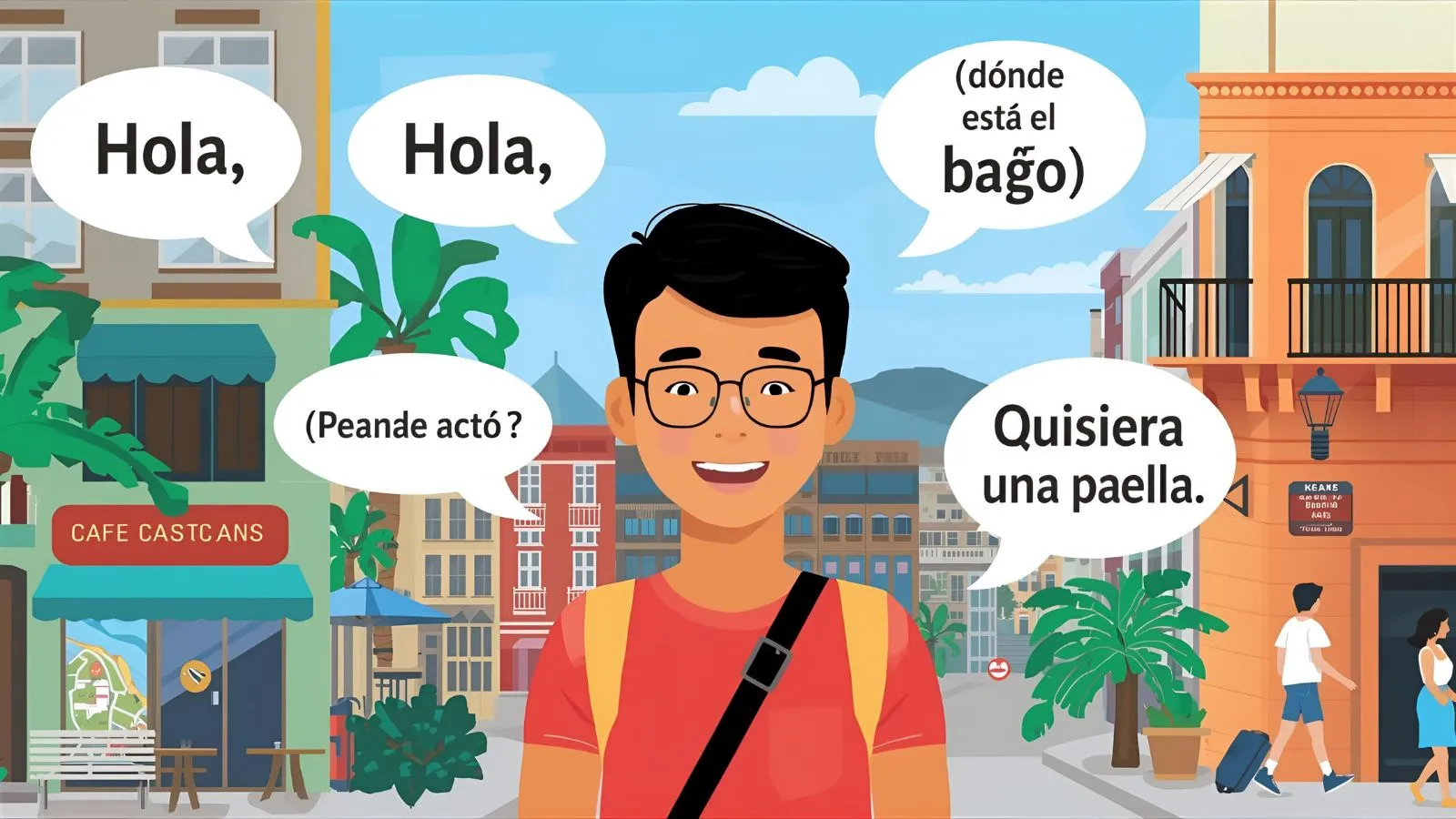
Traveling to a Spanish-speaking country can be thrilling—but also a little intimidating if you don’t speak the language.
That’s where common Spanish phrases for travel come in. These simple phrases are your passport to smoother communication, more enjoyable experiences, and a deeper connection with locals.
If you’re ordering food at a cozy café in Madrid, asking for directions in Mexico City, or haggling for souvenirs in Bogotá, knowing a few key phrases can make all the difference.
Using these phrases isn’t just about convenience—it’s about showing respect for the culture, building confidence, and avoiding misunderstandings. By the end of this guide, you’ll have a handy toolkit of phrases ready to tackle airports, hotels, restaurants, and more.
You’ll also gain tips on when and how to use them naturally, so you can travel with ease and charm.
Why It Matters: The Power of Knowing Spanish Phrases 🗣️
Imagine arriving in a bustling city like Barcelona, excited to explore, only to struggle communicating with taxi drivers or waiters. Frustrating, right? That’s why common Spanish phrases for travel matter. They help you:
- Navigate easily: Asking for directions or transportation info becomes simple.
- Order food confidently: You’ll know how to say exactly what you want.
- Connect with locals: Even a small greeting can go a long way in showing respect.
- Avoid confusion or mistakes: Misunderstandings can be avoided with clear, polite phrases.
For example, if you know how to say “¿Dónde está el baño?” (Where is the bathroom?), you won’t end up in an awkward situation when nature calls. Or, by saying “Una mesa para dos, por favor” (A table for two, please), you make a restaurant experience smooth and polite. Simple phrases like these save time, frustration, and make your trip more enjoyable.
Greetings & Basic Politeness 🙋♂️🙋♀️

1. Hola – Hello
Explanation: The most basic greeting. Use it anytime you meet someone.
Use When: Entering a store, meeting a taxi driver, or greeting hotel staff.
Example: Hola, ¿cómo está? (Hello, how are you?)
2. Buenos días – Good morning
Explanation: A polite way to greet someone before noon.
Use When: Checking in at a hotel or ordering breakfast.
Example: Buenos días, me gustaría un café, por favor. (Good morning, I would like a coffee, please.)
3. Buenas tardes – Good afternoon
Explanation: A polite afternoon greeting.
Use When: Visiting shops, attractions, or restaurants after 12 PM.
Example: Buenas tardes, ¿cuánto cuesta esto? (Good afternoon, how much is this?)
4. Por favor & Gracias – Please & Thank you
Explanation: Essential politeness phrases.
Use When: Asking for help, ordering food, or receiving service.
Example: Una botella de agua, por favor. (A bottle of water, please.)
Asking for Directions 🗺️
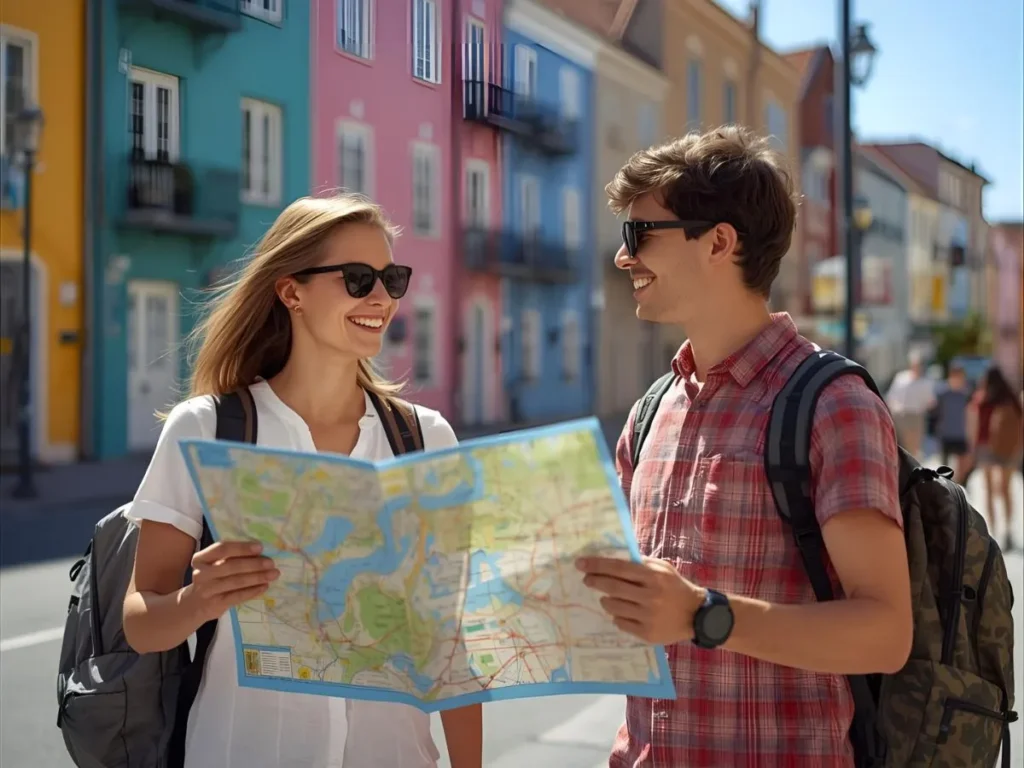
1. ¿Dónde está…? – Where is…?
Explanation: The basic phrase for asking directions.
Use When: Locating landmarks, restaurants, or restrooms.
Example: ¿Dónde está la estación de tren? (Where is the train station?)
2. A la derecha / A la izquierda – To the right / To the left
Explanation: Helps you follow directions easily.
Use When: Walking in a city or navigating streets.
Example: Gire a la derecha en la esquina. (Turn right at the corner.)
3. Cerca / Lejos – Near / Far
Explanation: Helps clarify distances when asking locals.
Use When: Confirming how far your destination is.
Example: ¿Está lejos el hotel? (Is the hotel far?)
4. ¿Cuánto tiempo se tarda en llegar? – How long does it take to get there?
Explanation: Useful for planning travel time.
Use When: Asking taxi drivers or bus conductors.
Example: ¿Cuánto tiempo se tarda en llegar al aeropuerto? (How long does it take to get to the airport?)
Transportation Phrases 🚕🚌
1. Un billete para… – A ticket to…
Explanation: Used for trains, buses, or other public transport.
Use When: Buying tickets at stations.
Example: Un billete para Madrid, por favor. (A ticket to Madrid, please.)
2. ¿Cuánto cuesta el taxi al aeropuerto? – How much is a taxi to the airport?
Explanation: Essential for negotiating fares or confirming prices.
Use When: Taking taxis or ride shares.
Example: ¿Cuánto cuesta el taxi al aeropuerto?
3. ¿A qué hora sale el autobús? – What time does the bus leave?
Explanation: Helps plan your trips and avoid missing buses.
Use When: Checking bus or coach schedules.
Example: ¿A qué hora sale el autobús a Sevilla?
4. Necesito ayuda con mi equipaje – I need help with my luggage
Explanation: Helpful for airports or hotels.
Use When: Carrying heavy luggage or checking in.
Example: Necesito ayuda con mi equipaje, por favor.
Dining Out & Ordering Food 🍽️
1. La carta / El menú, por favor – The menu, please
Explanation: Ask for a menu politely.
Use When: Entering a restaurant.
Example: La carta, por favor.
2. Quisiera… – I would like…
Explanation: A polite way to order food.
Use When: Selecting dishes or drinks.
Example: Quisiera una paella, por favor.
3. La cuenta, por favor – The check, please
Explanation: When you’re ready to pay.
Use When: Finishing your meal.
Example: La cuenta, por favor.
4. ¿Está incluido el servicio? – Is the service included?
Explanation: Clarifies if the tip is part of the bill.
Use When: Dining out at restaurants.
Example: ¿Está incluido el servicio en la cuenta?
Shopping & Bargaining 🛍️

1. ¿Cuánto cuesta? – How much does it cost?
Explanation: The basic question for any purchase.
Use When: Shopping at stores or markets.
Example: ¿Cuánto cuesta esta camiseta?
2. ¿Puedo probarlo? – Can I try it on?
Explanation: Useful for clothing or shoes.
Use When: Trying on clothes at shops.
Example: ¿Puedo probarlo?
3. ¿Aceptan tarjeta de crédito? – Do you accept credit cards?
Explanation: Helps avoid cash-only surprises.
Use When: Paying at stores, markets, or restaurants.
Example: ¿Aceptan tarjeta de crédito?
Emergencies & Health 🏥
1. ¡Ayuda! – Help!
Explanation: Essential for urgent situations.
Use When: Needing immediate assistance.
Example: ¡Ayuda! Me he perdido. (Help! I’m lost.)
2. Necesito un médico – I need a doctor
Explanation: Important for health emergencies.
Use When: Visiting clinics or hospitals.
Example: Necesito un médico, por favor.
3. ¿Dónde está la farmacia más cercana? – Where is the nearest pharmacy?
Explanation: Helps find medicine quickly.
Use When: Feeling unwell or buying medication.
Example: ¿Dónde está la farmacia más cercana?
Final Thoughts ✅
Mastering common Spanish phrases for travel isn’t just about memorization—it’s about confidence and cultural connection.
Start with greetings, basic questions, and polite phrases, then expand into dining, shopping, transportation, and emergency phrases. Using even a few words correctly can create a positive impression and make your travels smoother and more enjoyable.
Remember, practice makes perfect.
Repeat phrases aloud, try them with locals, and don’t be afraid to make mistakes. Every attempt counts toward better communication, richer experiences, and unforgettable travel memories.
Bonus Recap Table 📝
| Category | Phrase | Use When | Example |
|---|---|---|---|
| Greetings | Hola | Meeting someone | Hola, ¿cómo está? |
| Directions | ¿Dónde está…? | Asking for locations | ¿Dónde está la estación de tren? |
| Transportation | Un billete para… | Buying tickets | Un billete para Madrid, por favor |
| Dining | Quisiera… | Ordering food | Quisiera una paella, por favor |
| Shopping | ¿Cuánto cuesta? | Buying items | ¿Cuánto cuesta esta camiseta? |
| Emergencies | ¡Ayuda! | Urgent help | ¡Ayuda! Me he perdido |

Leave a Reply