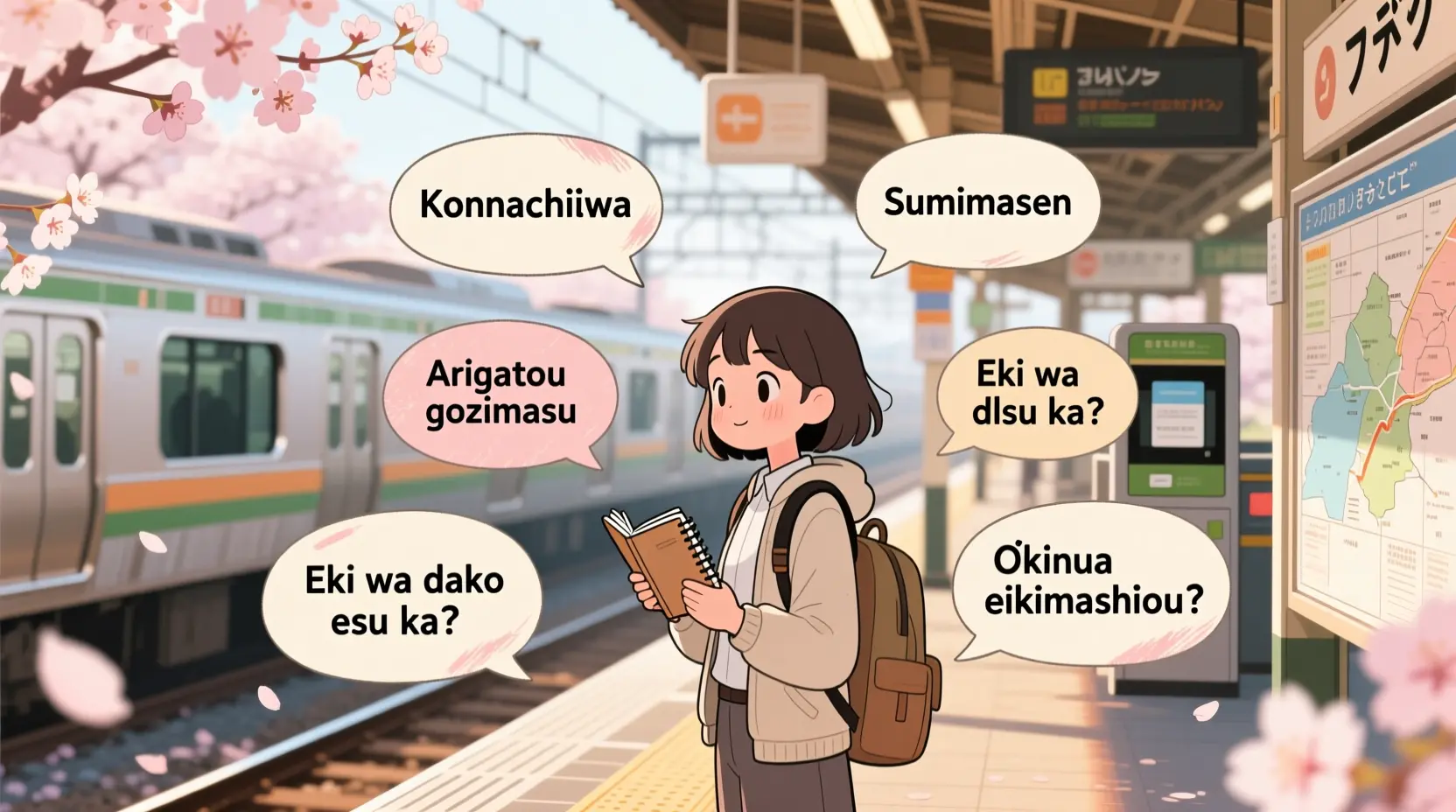
Traveling to Japan is an unforgettable adventure rich culture, polite people, and breathtaking sights. But there’s one tiny challenge .
If you’re heading to Japan, knowing some common Japanese phrases for travel can make your journey smoother, friendlier, and more fun.
If you’re ordering sushi asking for directions or checking into your hotel 🏨, a few simple Japanese words can go a long way.
Speaking even a little Japanese shows respect for the culture and helps you connect with locals who appreciate your effort.
In this guide, we’ll explore the most useful Japanese travel phrases from greetings and dining etiquette to transportation and emergencies.
🌸 Why Common Japanese Phrases for Travel Matter
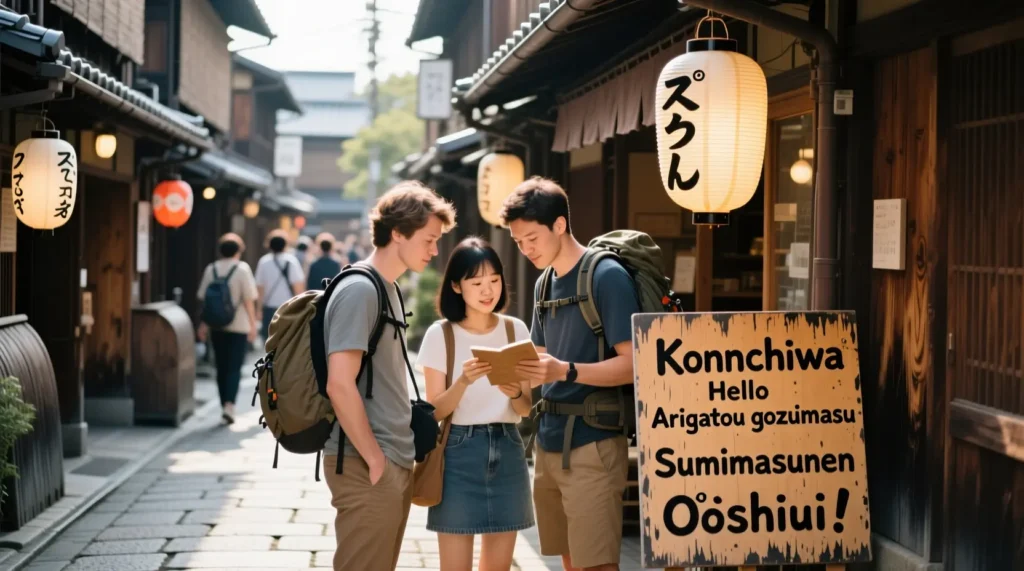
Japan is one of the friendliest places for tourists, but English isn’t widely spoken outside major cities. Knowing basic Japanese travel phrases can help you navigate daily interactions more easily.
Imagine you’re in a small sushi bar in Kyoto. The chef greets you with a smile and says, “Irasshaimase!” Instantly, there’s a connection a shared moment of respect and appreciation.
Here’s why learning common Japanese phrases for travel is essential:
- It helps you find your way when English signs aren’t available.
- You can order food or ask for help without confusion.
- Locals respond more warmly when you speak a bit of Japanese.
- It adds authentic cultural experiences to your trip.
👋 Basic Greetings and Polite Phrases
Start your journey right with polite and friendly Japanese greetings. These are the first phrases every traveler should learn.
こんにちは (Konnichiwa) – Hello
Use When: Greeting people during the day.
Example: You walk into a shop: “Konnichiwa!”
おはようございます (Ohayou gozaimasu) – Good Morning
Use When: Morning hours before noon.
Example: Saying good morning to your hotel staff: “Ohayou gozaimasu!”
こんばんは (Konbanwa) – Good Evening
Use When: Greeting someone after sunset.
Example: You meet your host at dinner: “Konbanwa!”
ありがとうございます (Arigatou gozaimasu) – Thank You Very Much
Use When: Expressing gratitude politely.
Example: After receiving help: “Arigatou gozaimasu!”
すみません (Sumimasen) – Excuse Me / I’m Sorry
Use When: Getting attention or apologizing.
Example: “Sumimasen, where is the train station?”
🍱 Eating Out and Ordering Food
Japanese dining is a unique experience! Use these common Japanese phrases for travel to order food and show good manners.
これをください (Kore o kudasai) – Please Give Me This
Use When: Pointing to something on a menu or display.
Example: “Kore o kudasai” (pointing to ramen).
メニューをください (Menyuu o kudasai) – Please Give Me the Menu
Use When: Asking for a menu politely.
Example: “Menyuu o kudasai.”
おいしいです (Oishii desu) – It’s Delicious
Use When: Complimenting food.
Example: After tasting sushi: “Oishii desu!”
お会計をお願いします (Okaikei o onegaishimasu) – Check, Please
Use When: Asking to pay the bill.
Example: “Okaikei o onegaishimasu.”
いただきます / ごちそうさまでした (Itadakimasu / Gochisousama deshita) – Before/After Meal Phrases
Use When: Before eating (itadakimasu) and after finishing (gochisousama deshita).
Example: Before meal: “Itadakimasu!”
🏨 Hotel and Accommodation Phrases

Checking into hotels or guesthouses? These useful Japanese travel phrases will help you communicate politely with staff.
予約しています (Yoyaku shiteimasu) – I Have a Reservation
Use When: Checking in at a hotel.
Example: “Yoyaku shiteimasu, Tanaka desu.”
Wi-Fiはありますか? (Wi-Fi wa arimasu ka?) – Do You Have Wi-Fi?
Use When: Asking about internet access.
Example: “Wi-Fi wa arimasu ka?”
鍵をください (Kagi o kudasai) – Please Give Me the Key
Use When: Requesting your room key.
Example: “Kagi o kudasai.”
チェックアウトは何時ですか? (Chekkuauto wa nanji desu ka?) – What Time Is Checkout?
Use When: Confirming checkout time.
Example: “Chekkuauto wa nanji desu ka?”
🚆 Getting Around: Transportation Phrases
Japan’s transport system is world-class but can be confusing. These phrases make travel easier.
駅はどこですか? (Eki wa doko desu ka?) – Where Is the Station?
Use When: Asking for directions.
Example: “Sumimasen, Eki wa doko desu ka?”
この電車は東京へ行きますか? (Kono densha wa Tokyo e ikimasu ka?) – Does This Train Go to Tokyo?
Use When: Checking your train direction.
Example: “Kono densha wa Tokyo e ikimasu ka?”
切符をください (Kippu o kudasai) – Please Give Me a Ticket
Use When: Buying tickets.
Example: “Tokyo made no kippu o kudasai.”
タクシーを呼んでください (Takushii o yonde kudasai) – Please Call a Taxi
Use When: Requesting transportation.
Example: “Takushii o yonde kudasai.”
🛍️ Shopping and Souvenirs
From Tokyo malls to Kyoto markets, shopping is a must! Here are key common Japanese phrases for travelers who love souvenirs.
いくらですか? (Ikura desu ka?) – How Much Is It?
Use When: Asking for price.
Example: “Kore wa ikura desu ka?”
安いですね! (Yasui desu ne!) – It’s Cheap!
Use When: Complimenting a good deal.
Example: “Yasui desu ne!”
試着できますか? (Shichaku dekimasu ka?) – Can I Try It On?
Use When: Shopping for clothes.
Example: “Shichaku dekimasu ka?”
これにします (Kore ni shimasu) – I’ll Take This
Use When: Finalizing a purchase.
Example: “Kore ni shimasu.”
🚑 Emergencies and Help
In case of an emergency, these phrases can be life-saving.
助けてください! (Tasukete kudasai!) – Please Help Me!
Use When: In any dangerous situation.
Example: “Tasukete kudasai!”
病院はどこですか? (Byouin wa doko desu ka?) – Where Is the Hospital?
Use When: Needing medical assistance.
Example: “Byouin wa doko desu ka?”
気分が悪いです (Kibun ga warui desu) – I Feel Sick
Use When: Feeling unwell.
Example: “Kibun ga warui desu.”
警察を呼んでください (Keisatsu o yonde kudasai) – Call the Police
Use When: Reporting an emergency.
Example: “Keisatsu o yonde kudasai.”
🗾 Cultural Etiquette and Respectful Expressions
Respect is a huge part of Japanese culture. Using polite phrases shows understanding and care.
よろしくお願いします (Yoroshiku onegaishimasu) – Please Take Care of Me / Nice to Meet You
Use When: Meeting someone new.
Example: “Hajimemashite, yoroshiku onegaishimasu.”
すごい! (Sugoi!) – Amazing!
Use When: Expressing excitement.
Example: “Sugoi! This view is incredible.”
ごめんなさい (Gomen nasai) – I’m Sorry
Use When: Apologizing casually.
Example: “Gomen nasai, I didn’t mean to bump into you.”
大丈夫です (Daijoubu desu) – It’s Okay / I’m Fine
Use When: Reassuring someone.
Example: “Daijoubu desu, thank you.”
🏯 Sightseeing and Asking for Directions
When exploring Japan’s stunning spots, you’ll need these Japanese travel phrases to ask for help.
写真を撮ってもいいですか? (Shashin o totte mo ii desu ka?) – May I Take a Picture?
Use When: Asking permission for photos.
Example: “Shashin o totte mo ii desu ka?”
トイレはどこですか? (Toire wa doko desu ka?) – Where Is the Bathroom?
Use When: Finding restrooms.
Example: “Sumimasen, Toire wa doko desu ka?”
ここはどこですか? (Koko wa doko desu ka?) – Where Am I?
Use When: Feeling lost.
Example: “Sumimasen, koko wa doko desu ka?”
おすすめはありますか? (Osusume wa arimasu ka?) – Do You Have Any Recommendations?
Use When: Seeking travel advice.
Example: “Osusume wa arimasu ka?”
🧭 Bonus Recap Table
| Category | Japanese Phrase | Meaning | Example Use |
|---|---|---|---|
| Greetings | こんにちは | Hello | Greeting someone |
| Food | おいしいです | It’s delicious | Praising a dish |
| Hotel | 予約しています | I have a reservation | Checking in |
| Transport | 駅はどこですか? | Where is the station? | Asking directions |
| Shopping | いくらですか? | How much is it? | Asking price |
| Emergency | 助けてください! | Help me! | In danger |
| Culture | よろしくお願いします | Nice to meet you | Introductions |
| Sightseeing | トイレはどこですか? | Where is the bathroom? | Finding restrooms |
🌏 Final Thoughts
Learning common Japanese phrases for travel doesn’t just make your trip easier it makes it unforgettable.
You’ll build genuine connections, explore confidently, and experience Japan beyond tourist translations.
Start with a few phrases daily say konnichiwa to a shopkeeper, arigatou to a waiter, or sumimasen when asking for help. You’ll be surprised how warmly people respond!

QuicklyReply helps you master real-life communication with ready-to-use English phrases for work, travel, and daily life—perfect for teachers, learners, and professionals seeking quick, natural expressions.
Leave a Reply