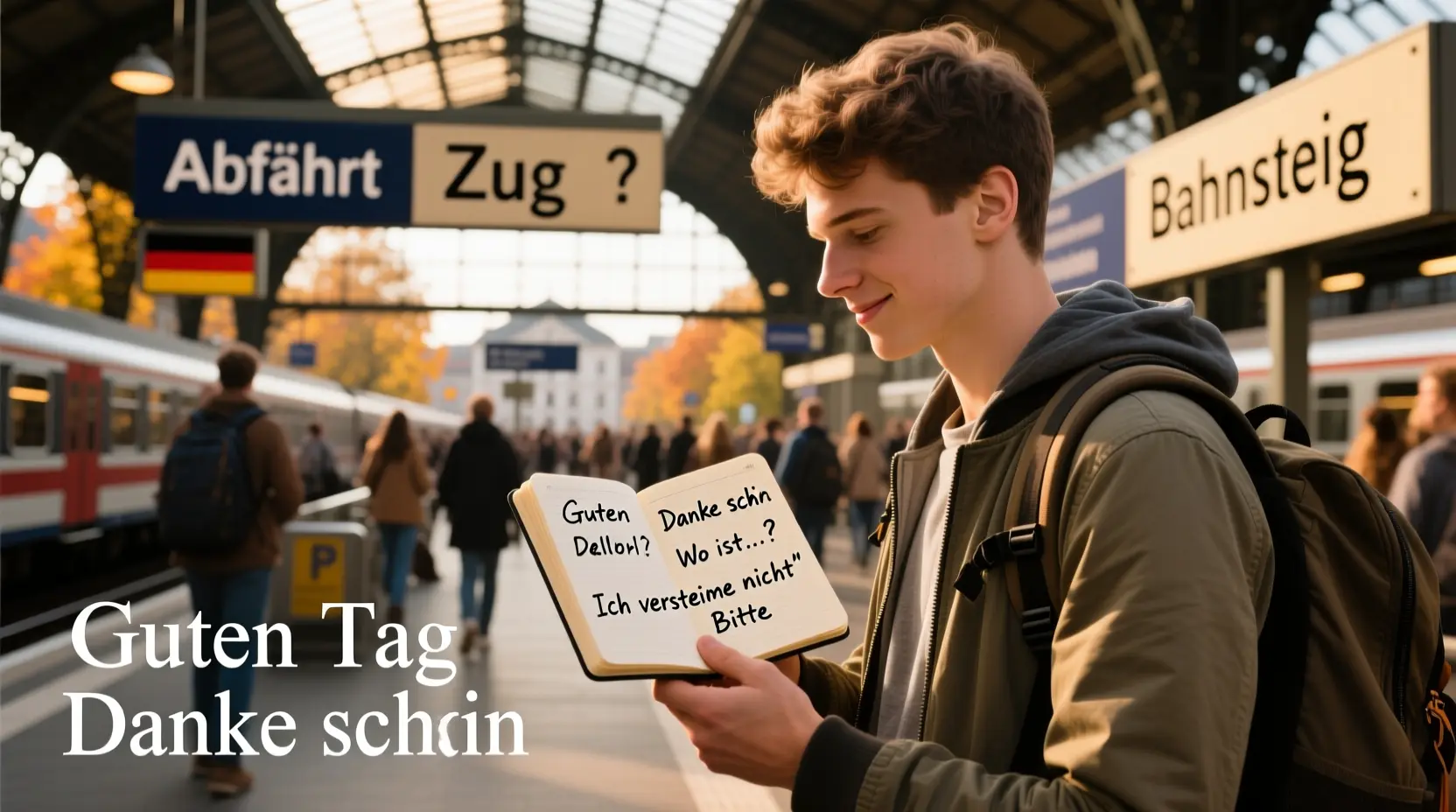
When you’re traveling through Germany, Austria, or Switzerland, knowing a few common German phrases for travel can make everything easier.
Think of it like having a small key that opens many doors from ordering food to asking for directions to handling quick conversations with locals.
Even if you don’t plan to become fluent, learning simple German travel phrases helps you feel confident, calm, and ready for any new place you explore.
These moments can slow you down and take away from the fun.
But with the right phrases, everything becomes smoother.
This guide will give you friendly, easy, and useful German sentences you can use right away on your trip.
Why It Matters
Using common German phrases for travel helps you connect with locals and avoid confusion in new situations. Many people in Germany speak English, but not everyone will — especially in small towns, markets, bus stops, or local cafés. When you show effort by speaking a little German, people respond warmly. It shows respect, friendliness, and confidence.
Imagine needing help finding your hotel, ordering your favorite food, or checking a train schedule. Simple phrases can save you time and stress. They also make your trip feel more real and enjoyable. You won’t just be visiting — you’ll be interacting, connecting, and understanding the culture around you.
Whether you’re traveling for fun, work, or study, these phrases prepare you for smoother communication.
Helpful Greetings and Basics 👋
Hallo — Hello
What it means: A simple and friendly greeting
Use When: Starting any conversation
Example: Hallo! Können Sie mir helfen?
Guten Morgen — Good morning
What it means: A polite way to greet someone early in the day
Use When: Entering a shop or meeting someone before noon
Example: Guten Morgen! Wo ist der Bahnhof?
Guten Abend — Good evening
What it means: A formal yet warm evening greeting
Use When: Checking into a hotel or greeting someone after sunset
Example: Guten Abend! Ich habe eine Reservierung.
Bitte — Please / You’re welcome
What it means: A useful word for polite talk
Use When: Asking for help or responding to thanks
Example: Ein Wasser, bitte.
Danke — Thank you
What it means: A simple expression of gratitude
Use When: After receiving help, food, or information
Example: Danke! Das hilft sehr.
Getting Around and Transportation 🚆
Wo ist der Bahnhof? — Where is the train station?
What it means: Helps you locate stations
Use When: Asking locals or staff
Example: Entschuldigung, wo ist der Bahnhof?
Wie komme ich nach…? — How do I get to…?
What it means: Useful for directions
Use When: Navigating unfamiliar cities
Example: Wie komme ich nach Alexanderplatz?
Ein Ticket nach…, bitte — A ticket to…, please
What it means: For buying train or bus tickets
Use When: At ticket counters or machines
Example: Ein Ticket nach München, bitte.
Hält der Bus hier? — Does the bus stop here?
What it means: Clarifies bus routes
Use When: Waiting at bus stops
Example: Hält der Bus hier oder drüben?
Wie spät ist es? — What time is it?
What it means: Helps you stay on schedule
Use When: When your phone dies or you need quick info
Example: Wie spät ist es? Ich muss zum Zug.
Shopping Essentials 🛍️
Wie viel kostet das? — How much does this cost?
What it means: Asking for prices
Use When: Markets, shops, and street vendors
Example: Wie viel kostet das T-Shirt?
Haben Sie das in einer anderen Größe? — Do you have this in another size?
What it means: When something doesn’t fit
Use When: Clothing stores
Example: Haben Sie das in einer anderen Größe?
Kann ich mit Karte bezahlen? — Can I pay by card?
What it means: To check payment options
Use When: Paying anywhere
Example: Kann ich mit Karte bezahlen oder nur bar?
Ich schaue nur — I’m just looking
What it means: A polite response to staff
Use When: Browsing items
Example: Danke, ich schaue nur.
Tüte, bitte — Bag, please
What it means: Ask for a shopping bag
Use When: Supermarkets or stores
Example: Eine Tüte, bitte.
Eating and Dining Out 🍽️

Einen Tisch für zwei, bitte — A table for two, please
What it means: For seating at restaurants
Use When: Arriving at any dining place
Example: Einen Tisch für zwei, bitte.
Die Speisekarte, bitte — The menu, please
What it means: To ask for the menu
Use When: Before ordering food
Example: Haben Sie die Speisekarte, bitte?
Ich hätte gern… — I would like…
What it means: A polite way to order
Use When: Ordering meals or drinks
Example: Ich hätte gern ein Wasser.
Ist das vegetarisch? — Is this vegetarian?
What it means: Useful for dietary needs
Use When: Asking about ingredients
Example: Ist das vegetarisch oder vegan?
Die Rechnung, bitte — The bill, please
What it means: For paying and leaving
Use When: After finishing your meal
Example: Die Rechnung, bitte.
Emergencies and Help 🚨
Hilfe! — Help!
What it means: Emergency call
Use When: Any urgent situation
Example: Hilfe! Ich brauche Unterstützung.
Ich habe mich verlaufen — I’m lost
What it means: For when you lose your way
Use When: In busy cities or stations
Example: Ich habe mich verlaufen. Können Sie mir helfen?
Rufen Sie die Polizei! — Call the police!
What it means: For dangerous situations
Use When: Serious emergencies
Example: Bitte rufen Sie die Polizei!
Ich brauche einen Arzt — I need a doctor
What it means: Health emergencies
Use When: Illness, injury, or sudden sickness
Example: Ich brauche einen Arzt.
Wo ist die Apotheke? — Where is the pharmacy?
What it means: For medicine needs
Use When: Minor sickness or allergies
Example: Wo ist die nächste Apotheke?
Hotel and Accommodation 🏨
Ich habe eine Reservierung — I have a reservation
What it means: For checking in
Use When: At hotel desks
Example: Hallo! Ich habe eine Reservierung.
Haben Sie WLAN? — Do you have Wi-Fi?
What it means: Asking about internet
Use When: Checking in or entering cafés
Example: Haben Sie WLAN?
Können Sie das wiederholen? — Can you repeat that?
What it means: When you didn’t understand
Use When: Fast-spoken instructions
Example: Können Sie das bitte wiederholen?
Wo ist mein Zimmer? — Where is my room?
What it means: Locate your room
Use When: After receiving your key
Example: Wo ist mein Zimmer?
Ich brauche Handtücher — I need towels
What it means: Requesting room items
Use When: Staying in hotels or hostels
Example: Ich brauche neue Handtücher.
Basic Social and Polite Phrases 😊
Ich verstehe nicht — I don’t understand
What it means: When confused
Use When: Fast or unclear conversations
Example: Entschuldigung, ich verstehe nicht.
Können Sie langsamer sprechen? — Can you speak slower?
What it means: Helps beginners
Use When: Talking to locals
Example: Können Sie langsamer sprechen?
Alles gut — All good
What it means: Casual reassurance
Use When: Responding to apologies
Example: Alles gut, kein Problem.
Sehr schön! — Very nice!
What it means: A compliment
Use When: Praising a place, item, or person
Example: Das ist sehr schön!
Ich komme aus… — I am from…
What it means: Sharing your home country
Use When: Meeting new people
Example: Ich komme aus Pakistan.
Bonus Recap Table
| Category | Useful Phrase | Meaning | Example |
|---|---|---|---|
| Greetings | Hallo | Hello | Hallo! Wie geht’s? |
| Transport | Wo ist der Bahnhof? | Where is the station? | Wo ist der Bahnhof? |
| Shopping | Wie viel kostet das? | Cost query | Wie viel kostet das? |
| Dining | Die Rechnung, bitte | Bill please | Die Rechnung, bitte |
| Emergencies | Hilfe! | Help | Hilfe! Bitte! |
| Hotel | Ich habe eine Reservierung | I have a reservation | Hallo, ich habe eine Reservierung |
Final Thoughts
Traveling becomes much easier when you know common German phrases for travel.
These words help you meet people, solve small problems, and enjoy your trip with confidence. You don’t need perfect grammar.
You don’t need to speak fast. Just use simple, clear sentences. Locals appreciate the effort, and you’ll feel more connected to the culture around you.

At QuickReply.com, speed meets smart communication! Instantly craft perfect replies, boost engagement, and save time. Your go-to hub for quick, witty, and professional message responses anytime!
Leave a Reply