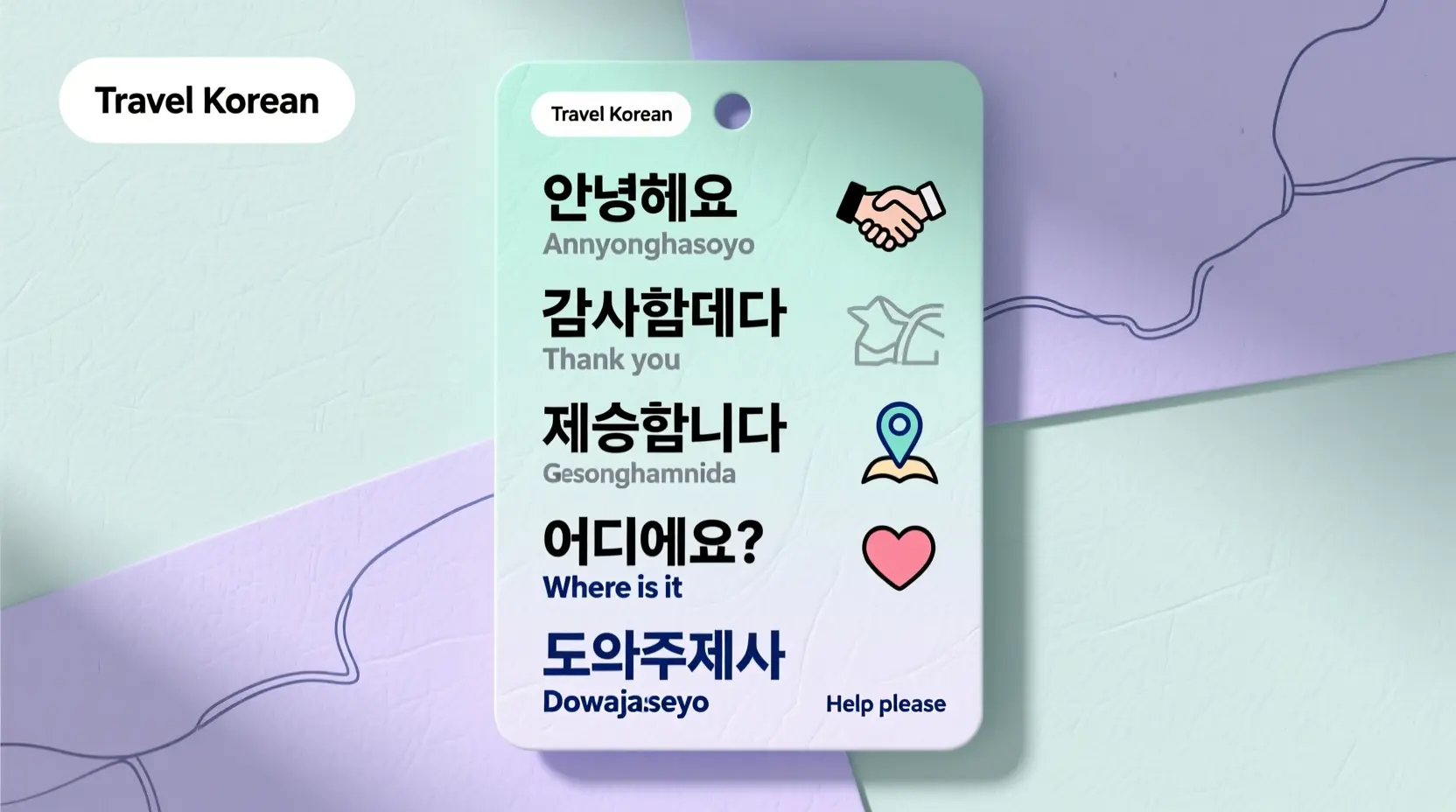
Traveling to Korea is exciting, but it can also feel a bit scary if you don’t know how to communicate.
That’s where basic Korean phrases for travel become your best travel partner.
These simple words and expressions help you move around with confidence, talk to locals, order food, ask for help, and enjoy your trip without stress.
Learning basic Korean phrases for travel helps you understand signs, talk face-to-face with shopkeepers, ask for directions, and handle small travel surprises.
Think of these phrases as tiny keys that open big doors.
Why It Matters: The Real Value of Basic Korean Phrases for Travel 🧳
Knowing basic Korean phrases for travel helps you feel safe, confident, and connected to people around you.
In many places outside big cities, English is not used much, so these simple phrases become very helpful.
For example, when ordering food in a small restaurant, the staff may not speak English. Saying a polite phrase like makes everything easier.
✨ Essential Greetings for Travelers
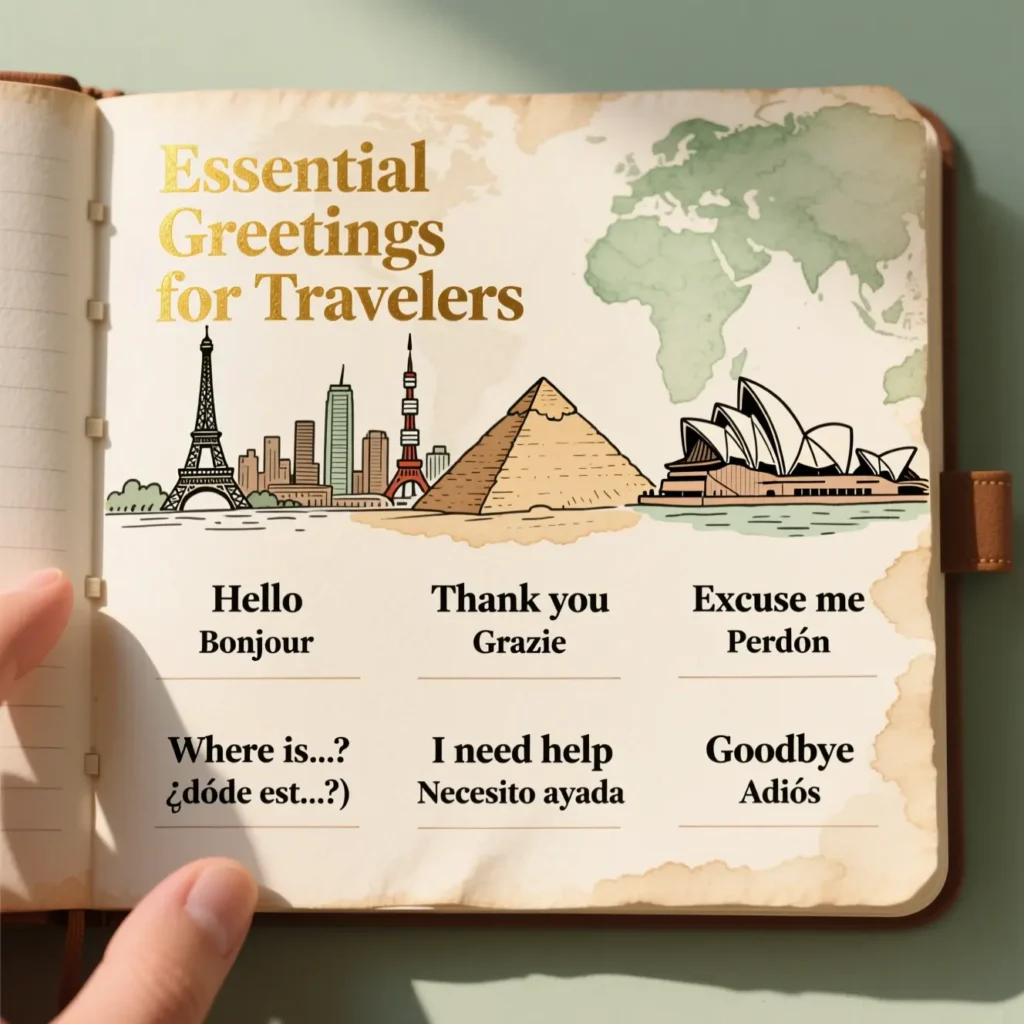
Hello – 안녕하세요 (Annyeonghaseyo)
Explanation: The most common and polite way to greet anyone in Korea.
Use When: Entering a store, approaching someone, meeting staff, or saying hello to anyone.
Example: You enter a café and say, “안녕하세요!” with a smile.
Thank You – 감사합니다 (Gamsahamnida)
Explanation: A polite way to show gratitude everywhere you go.
Use When: Receiving your order, directions, or help from locals.
Example: A shopkeeper hands you your purchase and you reply, “감사합니다!”
Excuse Me – 실례합니다 (Sillyehamnida)
Explanation: A polite phrase used when passing through crowds or trying to get attention kindly.
Use When: On busy streets, in stores, or when asking a quick question.
Example: You gently say, “실례합니다,” to pass someone in a tight space.
Goodbye – 안녕히 계세요 / 안녕히 가세요
Explanation: Two ways to say goodbye depending on who is leaving.
Use When:
You leave → “안녕히 계세요”
They leave → “안녕히 가세요”
Example: You leave a restaurant and say, “안녕히 계세요!”
🍜 Food & Restaurant Phrases
One Please – 하나 주세요 (Hana Juseyo)
Explanation: Use this to order anything—food, drinks, snacks, or tickets.
Use When: Ordering street food or a dish from the menu.
Example: Point at tteokbokki and say, “하나 주세요.”
It’s Delicious – 맛있어요 (Mashisseoyo)
Explanation: A friendly way to compliment food.
Use When: After eating something tasty.
Example: The cook smiles when you say, “맛있어요!”
No Spicy – 안 매운 거 있어요? (An Maeun Geo Isseoyo?)
Explanation: Helpful if you can’t handle spicy food.
Use When: Ordering soups, noodles, or street food.
Example: You ask, “안 매운 거 있어요?” before ordering.
Water Please – 물 주세요 (Mul Juseyo)
Explanation: Many places offer free water, but you must ask.
Use When: Eating in cafés, small restaurants, or food stalls.
Example: “물 주세요,” gets you a cup or bottle of water.
🗺️ Direction & Transportation Phrases
Where Is…? – 어디예요? (Eodiyeyo?)
Explanation: Attach a place word before it.
Use When: Asking for subway exits, markets, restrooms, or stores.
Example: “화장실 어디예요?” to ask for a restroom.
Subway Station – 지하철역 (Jihacheolyeok)
Explanation: Useful in cities with big subway networks.
Use When: Asking for the nearest station.
Example: “지하철역 어디예요?”
Help Me – 도와주세요 (Dowajuseyo)
Explanation: A polite way to ask for help in a difficult moment.
Use When: When lost or confused.
Example: “도와주세요,” if your card doesn’t work at a machine.
Stop Here Please – 여기서 내려 주세요 (Yeogiseo Naeryeo Juseyo)
Explanation: Tell taxi drivers or bus drivers where to stop.
Use When: Approaching your destination.
Example: “여기서 내려 주세요,” near your hotel.
🛒 Shopping Phrases
How Much Is This? – 이거 얼마예요? (Igeo Eolmayeyo?)
Explanation: The most useful shopping phrase.
Use When: Buying souvenirs, snacks, clothes, or anything.
Example: You hold up a keychain and ask, “이거 얼마예요?”
Too Expensive – 너무 비싸요 (Neomu Bissayo)
Explanation: A soft and polite way to say the price is high.
Use When: Markets or small shops.
Example: “너무 비싸요,” when you want a lower price.
Do You Have…? – 있어요? (Isseoyo?)
Explanation: A short and simple phrase to check availability.
Use When: Looking for sizes, colors, or items.
Example: “빨간색 있어요?” for asking if red color is available.
I’ll Take It – 이거 주세요 (Igeo Juseyo)
Explanation: Use when you decide to buy something.
Use When: Finalizing a purchase.
Example: “이거 주세요,” while handing the cashier your choice.
❤️ Polite & Cultural Phrases
Please – 제발 (Jebal)
Explanation: Adds softness to your request.
Use When: Asking for help or a small favor.
Example: “제발 조금만 기다려 주세요.”
I’m Sorry – 미안해요 / 죄송합니다
Explanation: Two levels of apology; the second is more formal.
Use When: Bumping into someone, being late, or asking again.
Example: “죄송합니다,” on a packed subway.
Nice to Meet You – 만나서 반가워요 (Mannaseo Bangawoyo)
Explanation: Great for friendly travel moments.
Use When: Meeting locals or new friends.
Example: “만나서 반가워요,” during a tour.
📱 Tech & Convenience Phrases
Wi-Fi Password – 와이파이 비밀번호 뭐예요? (Wifi Bimilbeonho Mwoyeyo?)
Explanation: Helpful in cafés, hotels, or restaurants.
Use When: Logging in to stay connected.
Example: “와이파이 비밀번호 뭐예요?”
Can You Take a Photo? – 사진 찍어 주세요 (Sajin Jjigeo Juseyo)
Explanation: Ask someone to take your picture politely.
Use When: At landmarks or scenic spots.
Example: “사진 찍어 주세요,” while handing your phone.
I Don’t Understand – 이해 못해요 (Ihae Mothaeyo)
Explanation: A gentle way to say you are confused.
Use When: During conversations with fast Korean speakers.
Example: “이해 못해요,” with a smile.
Slow Please – 천천히 말해 주세요 (Cheoncheonhi Malhae Juseyo)
Explanation: Ask the person to speak slowly.
Use When: Following directions or instructions.
Example: “천천히 말해 주세요,” when someone talks too fast.
💬 Emergency & Safety Phrases
Call the Police – 경찰 불러 주세요 (Gyeongchal Bulleo Juseyo)
Explanation: A very important safety phrase.
Use When: In emergencies only.
Example: “경찰 불러 주세요,” if something is unsafe.
I’m Lost – 길을 잃었어요 (Gireul Ireosseoyo)
Explanation: A simple way to ask for help finding your way.
Use When: In crowded markets or unfamiliar streets.
Example: “길을 잃었어요,” with your map in hand.
I Need a Doctor – 의사 필요해요 (Uisa Piryohayo)
Explanation: Helps when feeling unwell.
Use When: At clinics or with hotel staff.
Example: “의사 필요해요,” if you feel sick.
Is It Close? – 가까워요? (Gakkawoyo?)
Explanation: Simple way to check distance.
Use When: Walking long streets or hiking.
Example: “가까워요?” when unsure how far a place is.
📘 Bonus Recap Table
| Category | Phrase | Meaning | Example Use |
|---|---|---|---|
| Greetings | 안녕하세요 | Hello | Entering a shop |
| Food | 하나 주세요 | One please | Ordering food |
| Directions | 어디예요? | Where is…? | Finding a place |
| Shopping | 이거 얼마예요? | How much is this? | Buying items |
| Politeness | 감사합니다 | Thank you | Showing gratitude |
| Tech | 와이파이 비밀번호 뭐예요? | Wi-Fi password? | In a café |
| Emergency | 길을 잃었어요 | I’m lost | Asking for help |
✨ Final Thoughts
Learning basic Korean phrases for travel is one of the best ways to make your trip smoother, safer, and more enjoyable.
These phrases help you order food, get directions, shop, make friends, and handle surprises with confidence. You don’t need perfect pronunciation.
Start with easy phrases, practice daily, and use them whenever you can.
With a few helpful expressions in your pocket, your Korean adventure becomes more fun, warm, and full of connection.

Leave a Reply