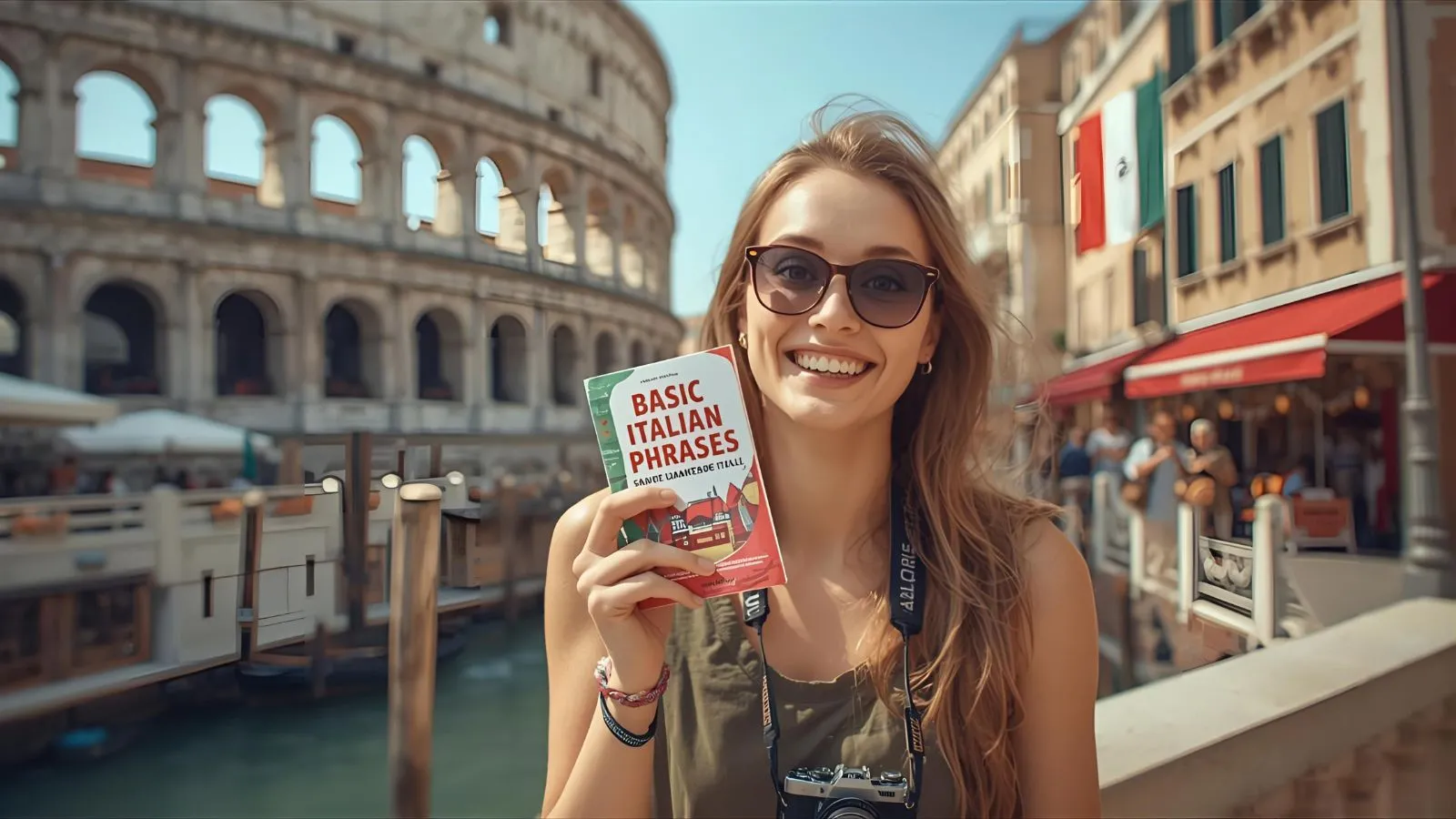
Planning a trip to Italy? If you’re sipping espresso in Rome, exploring Florence’s art-filled streets, or watching sunsets in Venice, knowing a few basic Italian phrases for travel can turn a good trip into a great one. You don’t need to be fluent—just a handful of essential words and expressions can help you connect with locals, navigate easily, and show respect for Italian culture.
This guide will teach you the most useful Italian travel phrases for real-life situations—greetings, dining, transportation, shopping, emergencies, and more. By the end, you’ll have the confidence to say “Ciao!” to new adventures and blend right in with Italian charm!
💬 Why It Matters
Italy is one of the world’s most visited countries, but not everyone speaks English fluently—especially in smaller towns or local cafés. Learning basic Italian phrases for travel can:
- Help you order food confidently in restaurants 🍕
- Make it easier to ask for directions or buy tickets 🚄
- Show politeness and respect for local culture 🙏
- Help you avoid misunderstandings and connect on a personal level ❤️
For example, saying “Grazie mille” (thank you very much) with a smile can make a waiter’s day. Or asking “Dov’è il bagno?” (where is the bathroom?) in Italian can save you from confusion.
Let’s explore the most practical Italian phrases for travelers, organized by real travel situations.
👋 1. Greetings and Introductions

Start your Italian journey with simple greetings—these words are the foundation of friendly communication.
Ciao (Hello / Hi / Bye)
Use When: Greeting friends or leaving casually.
Example: Ciao! Come stai? (Hi! How are you?)
Buongiorno (Good morning / Good day)
Use When: Meeting someone in the morning or early afternoon.
Example: Buongiorno, signora! (Good morning, ma’am!)
Buonasera (Good evening)
Use When: Greeting people in the evening.
Example: Buonasera, come va? (Good evening, how’s it going?)
Piacere (Nice to meet you)
Use When: Introducing yourself.
Example: Piacere! Mi chiamo Anna. (Nice to meet you! My name is Anna.)
Arrivederci (Goodbye)
Use When: Leaving politely.
Example: Arrivederci e buona giornata! (Goodbye and have a nice day!)
🍝 2. Eating Out and Restaurant Phrases
Italian food is legendary! These basic Italian phrases for travel will help you enjoy every meal.
Un tavolo per due, per favore (A table for two, please)
Use When: Entering a restaurant.
Example: Un tavolo per due, per favore.
Il menù, per favore (The menu, please)
Use When: Asking for the menu.
Example: Il menù, per favore.
Vorrei… (I would like…)
Use When: Ordering food or drinks.
Example: Vorrei una pizza margherita, per favore. (I’d like a margherita pizza, please.)
È delizioso! (It’s delicious!)
Use When: Complimenting your meal.
Example: È delizioso, grazie!
Il conto, per favore (The check, please)
Use When: Asking for the bill.
Example: Il conto, per favore.
🚆 3. Getting Around and Transportation
Traveling in Italy means trains, buses, and lots of walking! These phrases will help you move around with ease.
Dov’è la stazione? (Where is the station?)
Use When: Looking for the train station.
Example: Scusi, dov’è la stazione? (Excuse me, where is the station?)
Quanto costa il biglietto? (How much is the ticket?)
Use When: Buying bus or train tickets.
Example: Quanto costa il biglietto per Roma? (How much is the ticket to Rome?)
Questo treno va a Firenze? (Does this train go to Florence?)
Use When: Confirming your train route.
Example: Scusi, questo treno va a Firenze?
A che ora parte il treno? (What time does the train leave?)
Use When: Asking about departure times.
Example: A che ora parte il treno per Milano?
Mi può chiamare un taxi? (Can you call me a taxi?)
Use When: Requesting help at a hotel or station.
Example: Mi può chiamare un taxi, per favore?
🏨 4. Hotels and Accommodation

Checking in or asking for assistance? These Italian travel phrases make communication smooth.
Ho una prenotazione (I have a reservation)
Use When: Checking in.
Example: Buonasera, ho una prenotazione a nome di Rossi.
A che ora è il check-out? (What time is check-out?)
Use When: Clarifying hotel policy.
Example: A che ora è il check-out?
C’è il Wi-Fi? (Is there Wi-Fi?)
Use When: Asking about internet access.
Example: C’è il Wi-Fi gratuito? (Is there free Wi-Fi?)
Vorrei un’altra chiave, per favore (I’d like another key, please)
Use When: You lost your key.
Example: Vorrei un’altra chiave, per favore.
Posso avere più asciugamani? (Can I have more towels?)
Use When: Requesting items for your room.
Example: Posso avere più asciugamani, per favore?
🛍️ 5. Shopping and Souvenir Phrases
Italy’s markets and boutiques are irresistible. Use these basic Italian phrases for shopping.
Quanto costa? (How much does it cost?)
Use When: Asking a price.
Example: Quanto costa questa borsa? (How much is this bag?)
È troppo caro (It’s too expensive)
Use When: Negotiating politely.
Example: È troppo caro, può fare uno sconto? (It’s too expensive, can you give a discount?)
Lo prendo (I’ll take it)
Use When: Deciding to buy something.
Example: Va bene, lo prendo. (Okay, I’ll take it.)
Solo guardo (I’m just looking)
Use When: Browsing politely.
Example: Solo guardo, grazie.
Può farmi lo scontrino? (Can I have a receipt?)
Use When: Asking for proof of purchase.
Example: Può farmi lo scontrino, per favore?
🚑 6. Emergencies and Help

It’s always smart to know how to ask for help in Italian.
Aiuto! (Help!)
Use When: You need urgent help.
Example: Aiuto! Ho perso la mia borsa! (Help! I lost my bag!)
Chiami un dottore! (Call a doctor!)
Use When: Medical emergency.
Example: Chiami un dottore, per favore!
Mi sono perso/a (I’m lost)
Use When: You can’t find your way.
Example: Mi sono perso, può aiutarmi? (I’m lost, can you help me?)
Dov’è l’ospedale? (Where is the hospital?)
Use When: Needing medical help.
Example: Dov’è l’ospedale più vicino?
Ho bisogno di aiuto (I need help)
Use When: Asking for general assistance.
Example: Ho bisogno di aiuto, per favore.
🙏 7. Polite and Everyday Phrases
Politeness goes a long way in Italy. These expressions will make you sound friendly and respectful.
Per favore (Please)
Use When: Making polite requests.
Example: Un caffè, per favore.
Grazie / Grazie mille (Thank you / Thank you very much)
Use When: Showing gratitude.
Example: Grazie mille per l’aiuto!
Prego (You’re welcome)
Use When: Replying to “thank you.”
Example: Prego!
Mi scusi (Excuse me)
Use When: Politely interrupting or passing by.
Example: Mi scusi, dov’è la fermata dell’autobus?
Non capisco (I don’t understand)
Use When: You need clarification.
Example: Mi dispiace, non capisco.
🪷 Bonus Recap Table
| Category | Phrase | Meaning | Use When | Example |
|---|---|---|---|---|
| Greetings | Ciao | Hi / Bye | Greeting or leaving | Ciao! Come stai? |
| Food | Il conto, per favore | The check, please | Asking for bill | Il conto, per favore. |
| Transport | Dov’è la stazione? | Where’s the station? | Asking directions | Scusi, dov’è la stazione? |
| Hotel | Ho una prenotazione | I have a reservation | Checking in | Ho una prenotazione a nome di Rossi. |
| Shopping | Quanto costa? | How much is it? | Asking price | Quanto costa questa borsa? |
| Emergency | Aiuto! | Help! | In emergencies | Aiuto! Ho perso la mia borsa! |
| Politeness | Grazie mille | Thank you very much | Showing gratitude | Grazie mille! |
🇮🇹 Final Thoughts (Conclusion – 50 Words)
Learning basic Italian phrases for travel helps you connect, navigate, and explore Italy confidently.
You don’t need perfect grammar—just genuine effort and a smile.
With these phrases, you’ll travel smarter, make friends easier, and enjoy every espresso, piazza, and sunset like a true Italian! ☕🌅

At QuickReply.com, speed meets smart communication! Instantly craft perfect replies, boost engagement, and save time. Your go-to hub for quick, witty, and professional message responses anytime!
Leave a Reply