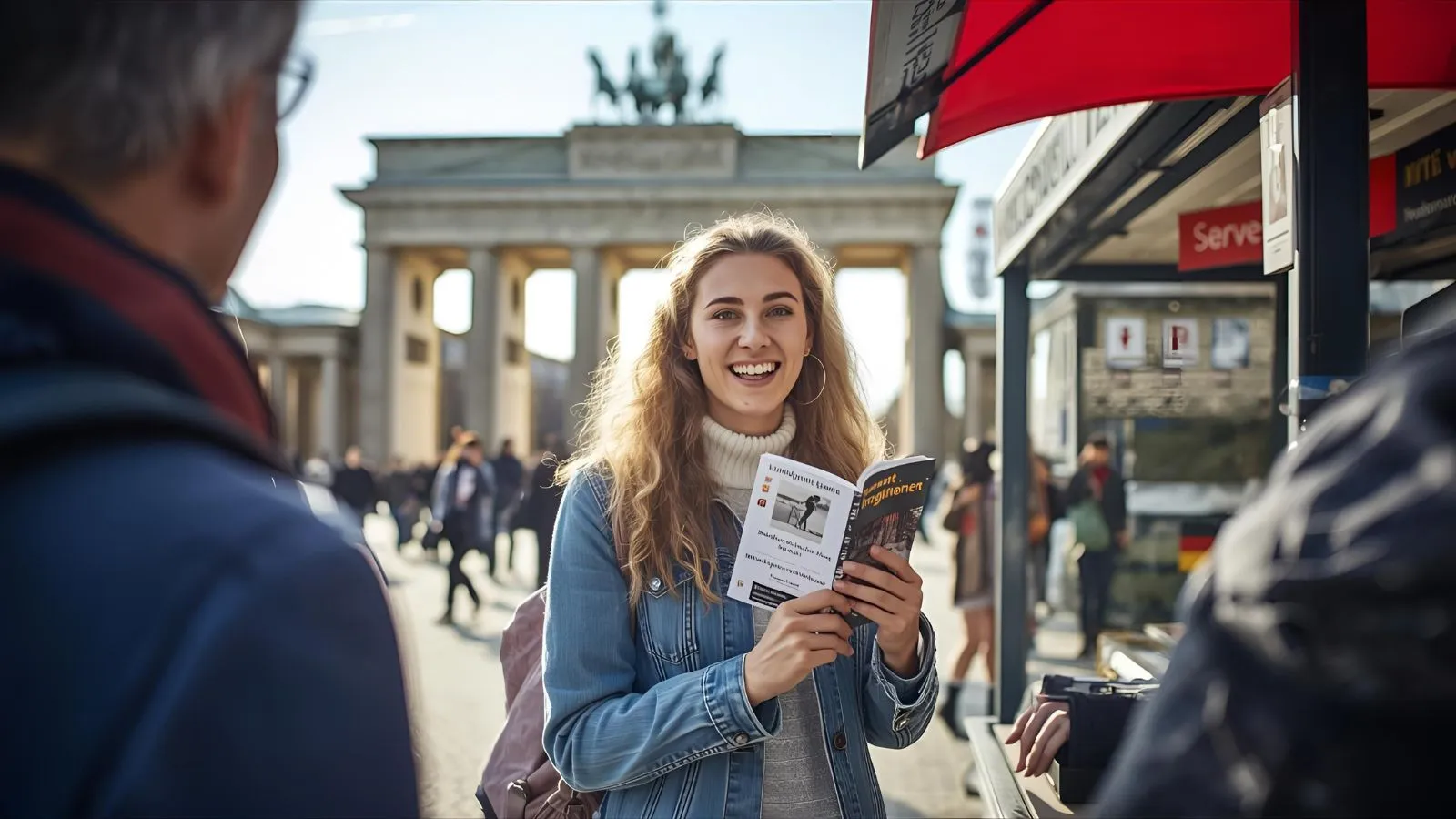
You know how it feels when you’re traveling to a new country and suddenly realize — uh oh — you don’t speak the language? 😅 Don’t worry, we’ve all been there. If you’re planning a trip to Germany, Austria, or Switzerland, learning a few basic German phrases for travel will make your journey so much smoother.
This isn’t about becoming fluent overnight — it’s about knowing just enough to order food confidently, ask for directions, or greet locals politely. Trust me, when you use even a few simple German words, people really appreciate the effort.
So let’s go through some easy, useful phrases that’ll help you sound more like a traveler who’s ready for adventure, not just another tourist lost in translation. 🇩🇪✈️
Why It Matters 💬
Learning basic German phrases for travel isn’t just practical — it’s essential for a better travel experience.
Here’s why:
- Respect and Connection: Speaking even a little German shows appreciation for the culture.
- Confidence: You’ll feel more comfortable asking questions, ordering food, or finding your way.
- Safety and Ease: Knowing how to ask for help or directions can be a lifesaver.
- Deeper Experiences: Locals often respond warmly when visitors try to speak their language.
Real-world example: Imagine you’re lost in Munich and say, “Entschuldigung, können Sie mir helfen?” (Excuse me, can you help me?). That small effort turns confusion into connection.
Now let’s explore the most useful German travel phrases for different situations!
Greetings and Introductions 👋

1. Hallo! (Hello!)
Explanation: The simplest and most common greeting in Germany.
Use When: Meeting anyone, anywhere.
Example: “Hallo! Wie geht’s?” (Hello! How are you?)
2. Guten Morgen! (Good morning!)
Explanation: A polite morning greeting.
Use When: Starting your day at a café or hotel.
Example: “Guten Morgen! Ein Kaffee, bitte.” (Good morning! A coffee, please.)
3. Wie heißen Sie? (What is your name?)
Explanation: A polite way to ask someone’s name.
Use When: Introducing yourself.
Example: “Wie heißen Sie?” “Ich heiße Anna.” (What’s your name? My name is Anna.)
4. Freut mich! (Nice to meet you!)
Explanation: Shows friendliness and good manners.
Use When: Meeting new people.
Example: “Ich heiße Tom.” “Freut mich!” (I’m Tom. Nice to meet you!)
Asking for Directions 🗺️

1. Wo ist…? (Where is…?)
Explanation: Essential phrase to find locations.
Use When: Looking for landmarks or transport.
Example: “Wo ist der Bahnhof?” (Where is the train station?)
2. Ich habe mich verlaufen. (I’m lost.)
Explanation: Useful when you can’t find your way.
Use When: You’re unsure of directions.
Example: “Entschuldigung, ich habe mich verlaufen.” (Excuse me, I’m lost.)
3. Können Sie mir helfen? (Can you help me?)
Explanation: A polite way to ask for assistance.
Use When: Need help from a local.
Example: “Können Sie mir helfen, das Hotel zu finden?” (Can you help me find the hotel?)
4. Wie komme ich zum Flughafen? (How do I get to the airport?)
Explanation: Great for travel and transport.
Use When: Heading to your next destination.
Example: “Wie komme ich zum Flughafen?” (How do I get to the airport?)
Ordering Food and Drinks 🍽️☕
1. Ich hätte gern… (I would like…)
Explanation: Polite way to order.
Use When: Ordering food or drinks.
Example: “Ich hätte gern ein Bier.” (I would like a beer.)
2. Die Speisekarte, bitte. (The menu, please.)
Explanation: Simple request for the menu.
Use When: Sitting down at a restaurant.
Example: “Die Speisekarte, bitte.” (The menu, please.)
3. Könnte ich die Rechnung haben, bitte? (Could I have the bill, please?)
Explanation: Used when you’re ready to pay.
Use When: Finishing your meal.
Example: “Könnte ich die Rechnung haben, bitte?” (Could I have the bill, please?)
4. Es war lecker! (It was delicious!)
Explanation: Great compliment for food.
Use When: Praising a meal or chef.
Example: “Es war lecker! Vielen Dank.” (It was delicious! Thank you very much.)
Transportation and Travel 🚆

1. Wie viel kostet das Ticket? (How much is the ticket?)
Explanation: Helpful when buying tickets.
Use When: At train or bus stations.
Example: “Wie viel kostet das Ticket nach Berlin?” (How much is the ticket to Berlin?)
2. Wann fährt der Zug ab? (When does the train leave?)
Explanation: Important for planning.
Use When: Checking departure times.
Example: “Wann fährt der Zug nach Hamburg ab?” (When does the train to Hamburg leave?)
3. Ich möchte ein Taxi bestellen. (I’d like to order a taxi.)
Explanation: Handy for calling transport.
Use When: At hotels or restaurants.
Example: “Ich möchte ein Taxi zum Flughafen bestellen.” (I’d like to order a taxi to the airport.)
4. Ist dieser Sitz frei? (Is this seat free?)
Explanation: Used on public transport.
Use When: Finding a place to sit.
Example: “Ist dieser Sitz frei?” (Is this seat free?)
Shopping and Payments 🛍️💶

1. Wie viel kostet das? (How much does this cost?)
Explanation: Must-know for any shopping trip.
Use When: Buying souvenirs or clothes.
Example: “Wie viel kostet das T-Shirt?” (How much does this T-shirt cost?)
2. Kann ich mit Karte bezahlen? (Can I pay by card?)
Explanation: Common and practical.
Use When: Checking payment options.
Example: “Kann ich mit Karte bezahlen?” (Can I pay by card?)
3. Ich schaue nur, danke. (I’m just looking, thanks.)
Explanation: Polite response to shop assistants.
Use When: Browsing without buying.
Example: “Ich schaue nur, danke.” (I’m just looking, thank you.)
4. Können Sie mir einen Rabatt geben? (Can you give me a discount?)
Explanation: Use when negotiating prices.
Use When: Markets or small shops.
Example: “Können Sie mir einen Rabatt geben?” (Can you give me a discount?)
Emergencies and Safety 🚑🚓
1. Hilfe! (Help!)
Explanation: The most important word to know.
Use When: In any emergency situation.
Example: “Hilfe! Ich brauche einen Arzt!” (Help! I need a doctor!)
2. Rufen Sie die Polizei! (Call the police!)
Explanation: For serious emergencies.
Use When: Reporting theft or danger.
Example: “Rufen Sie die Polizei!” (Call the police!)
3. Ich brauche einen Arzt. (I need a doctor.)
Explanation: Medical emergency phrase.
Use When: Feeling sick or injured.
Example: “Ich brauche einen Arzt, mir ist schlecht.” (I need a doctor, I feel sick.)
4. Wo ist die Apotheke? (Where is the pharmacy?)
Explanation: Useful for minor health issues.
Use When: Looking for medicine.
Example: “Wo ist die nächste Apotheke?” (Where is the nearest pharmacy?)
Polite Expressions and Everyday Essentials 🙏😊
1. Bitte (Please)
Explanation: The magic word in any language.
Use When: Making any polite request.
Example: “Ein Glas Wasser, bitte.” (A glass of water, please.)
2. Danke schön (Thank you very much)
Explanation: Expresses gratitude.
Use When: Someone helps or serves you.
Example: “Danke schön für Ihre Hilfe.” (Thank you very much for your help.)
3. Entschuldigung (Excuse me / Sorry)
Explanation: For attention or apology.
Use When: Passing someone or making a mistake.
Example: “Entschuldigung, wo ist die Toilette?” (Excuse me, where is the restroom?)
4. Kein Problem (No problem)
Explanation: Friendly and easy response.
Use When: Someone thanks you.
Example: “Danke!” “Kein Problem!” (Thanks! No problem!)
Final Thoughts 🌍
Learning basic German phrases for travel helps you explore Germany with confidence and respect. It opens doors to new friendships, smoother experiences, and deeper cultural appreciation.
Start small, practice daily, and use these phrases wherever you go. Before you know it, you’ll be ordering coffee, finding your train, and chatting with locals — all in German!
Bonus Recap Table
| Category | Phrase | Meaning | Example Use |
|---|---|---|---|
| Greetings 👋 | Guten Morgen | Good morning | “Guten Morgen! Ein Kaffee, bitte.” |
| Directions 🗺️ | Wo ist…? | Where is…? | “Wo ist der Bahnhof?” |
| Food & Drinks 🍽️ | Ich hätte gern… | I would like | “Ich hätte gern ein Bier.” |
| Transport 🚆 | Wie viel kostet das Ticket? | How much is the ticket? | “Wie viel kostet das Ticket nach Berlin?” |
| Shopping 🛍️ | Wie viel kostet das? | How much does this cost? | “Wie viel kostet das T-Shirt?” |
| Emergencies 🚑 | Hilfe! | Help! | “Hilfe! Ich brauche einen Arzt!” |
| Polite 🙏 | Danke schön | Thank you | “Danke schön für Ihre Hilfe.” |

At QuickReply.com, speed meets smart communication! Instantly craft perfect replies, boost engagement, and save time. Your go-to hub for quick, witty, and professional message responses anytime!
Leave a Reply