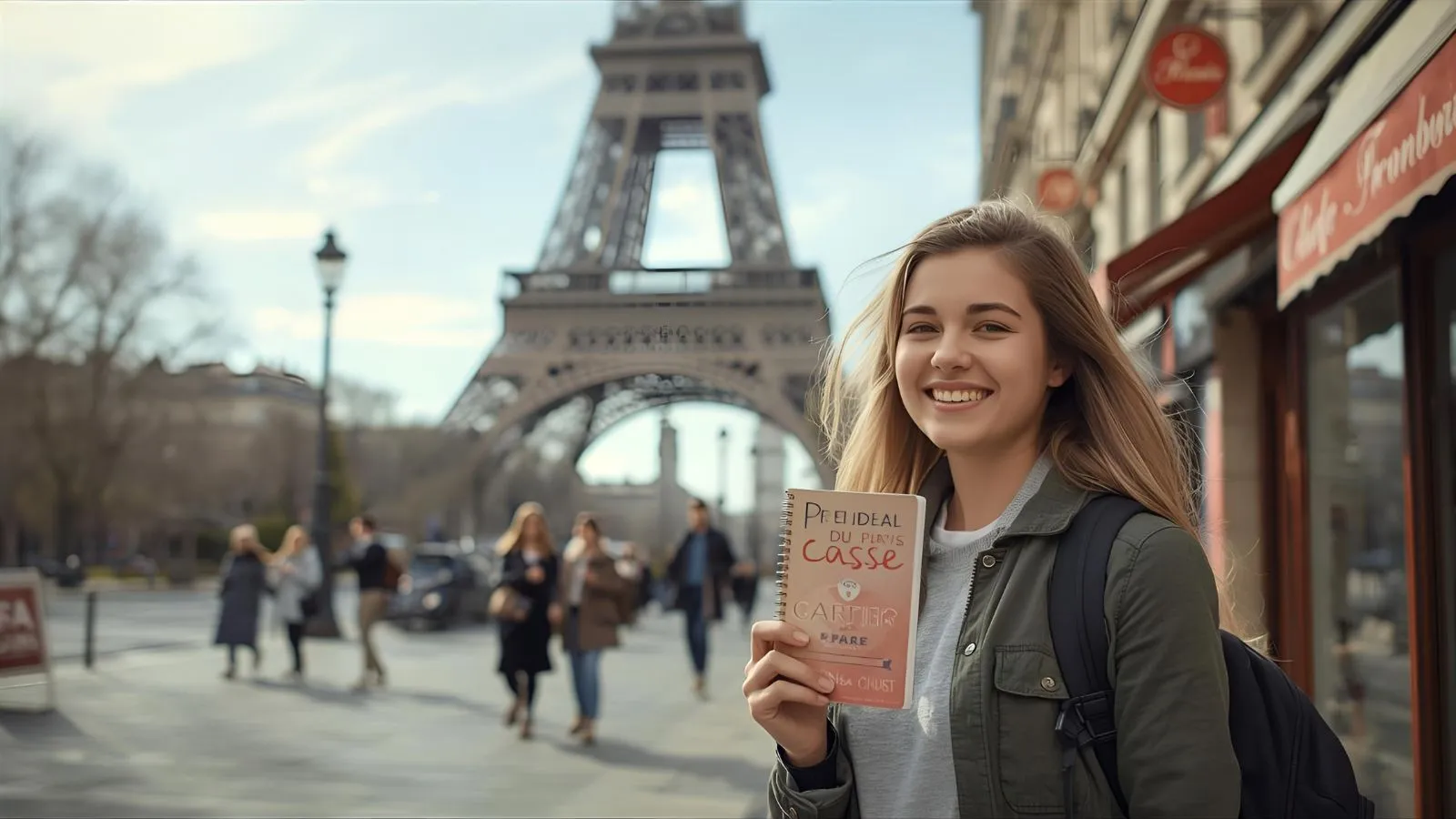
Hey there, traveler! 😊 So, you’re planning a trip to France — how exciting! Whether you’re strolling through the charming streets of Paris, exploring the beaches of Nice, or enjoying a croissant at a local café, knowing a few basic French phrases for travel can make your trip so much smoother.
I mean, imagine this: you walk into a French bakery, smile, and say “Bonjour!” — the baker instantly lights up. That small effort can turn an ordinary moment into a friendly connection. This guide is made exactly for travelers like you — people who want to enjoy their trip fully, connect with locals, and not feel lost in translation.
Let’s chat about the most useful, easy-to-learn French phrases that’ll help you travel confidently, make a great impression, and maybe even get a few smiles along the way. Ready?
Let’s go! ✈️
💡 Why It Matters
Knowing basic French phrases for travel isn’t just polite — it’s powerful. When you speak even a little French, people respond with warmth and respect. It shows you care about their culture, not just the sights.
Many French people understand English, especially in tourist areas. But outside big cities, a few French words go a long way. Imagine asking “Où est la gare ?” (Where is the train station?) instead of standing confused with a map. Or saying “Je voudrais un café, s’il vous plaît” (I would like a coffee, please) — you’ll likely get a smile in return.
These common French phrases can help you in real-life situations — at airports, hotels, restaurants, or while shopping. Plus, using French words makes you a more confident and respectful traveler.
👋 1. Essential Greetings and Polite Phrases

A friendly greeting is always the best way to start a conversation in France!
Bonjour (bohn-zhoor) – Hello / Good morning
Use When: Greeting anyone during the day.
Example: Bonjour! Comment ça va ? (Hello! How are you?)
Bonsoir (bohn-swahr) – Good evening
Use When: Greeting people in the evening.
Example: Bonsoir, madame. (Good evening, ma’am.)
Merci (mehr-see) – Thank you
Use When: Expressing gratitude.
Example: Merci pour votre aide. (Thank you for your help.)
S’il vous plaît (seel voo pleh) – Please
Use When: Making polite requests.
Example: Un café, s’il vous plaît. (A coffee, please.)
Excusez-moi (ehk-skew-zay mwah) – Excuse me
Use When: Getting someone’s attention or apologizing.
Example: Excusez-moi, où sont les toilettes ? (Excuse me, where is the restroom?)
🍽️ 2. Restaurant and Café Phrases
French food is famous worldwide — here’s how to order like a local!
Je voudrais… (zhuh voo-dreh) – I would like…
Use When: Ordering food or drinks.
Example: Je voudrais un croissant, s’il vous plaît. (I would like a croissant, please.)
L’addition, s’il vous plaît (la-dee-syon) – The bill, please
Use When: Asking for the check.
Example: L’addition, s’il vous plaît.
C’était délicieux (say-tay day-lee-syuh) – It was delicious
Use When: Complimenting your meal.
Example: C’était délicieux ! Merci beaucoup. (It was delicious! Thank you very much.)
Un verre d’eau, s’il vous plaît – A glass of water, please
Use When: Requesting water.
Example: Un verre d’eau, s’il vous plaît.
Le menu, s’il vous plaît – The menu, please
Use When: Asking to see the menu.
Example: Le menu, s’il vous plaît.
🚉 3. Transportation and Directions

Getting around France becomes much easier when you know these basic French travel phrases for transportation.
Où est la gare ? (oo eh la gar) – Where is the train station?
Use When: Asking for directions.
Example: Excusez-moi, où est la gare ?
Combien ça coûte ? (kohm-byen sah koot) – How much does it cost?
Use When: Asking about fares or tickets.
Example: Combien ça coûte pour Paris ? (How much does it cost to Paris?)
Je veux aller à… (zhuh vuh ah-lay ah) – I want to go to…
Use When: Telling a taxi driver your destination.
Example: Je veux aller à l’aéroport. (I want to go to the airport.)
À quelle heure ? (ah kell uhr) – At what time?
Use When: Asking about schedules.
Example: À quelle heure part le train ? (What time does the train leave?)
Arrêtez ici, s’il vous plaît – Stop here, please
Use When: When in a taxi or bus.
Example: Arrêtez ici, s’il vous plaît.
🏨 4. Hotel and Accommodation Phrases
Checking in or asking for help at a hotel? Use these polite expressions.
J’ai une réservation (zhay oon ray-zer-va-syon) – I have a reservation
Use When: Checking in.
Example: Bonjour, j’ai une réservation au nom de Sam.
Avez-vous le Wi-Fi ? (ah-vay voo luh wee-fee) – Do you have Wi-Fi?
Use When: Asking for internet access.
Example: Avez-vous le Wi-Fi, s’il vous plaît ?
Quelle est l’heure du départ ? – What time is check-out?
Use When: Asking about check-out time.
Example: Quelle est l’heure du départ ?
Je voudrais une autre chambre – I’d like another room
Use When: Requesting a room change.
Example: Je voudrais une autre chambre, s’il vous plaît.
Merci pour votre aide – Thank you for your help
Use When: Expressing gratitude to hotel staff.
Example: Merci pour votre aide, monsieur.
🛍️ 5. Shopping and Souvenir Phrases
Shopping in France is fun when you know how to ask the right way.
Combien ça coûte ? – How much does it cost?
Use When: Asking for price.
Example: Combien ça coûte, ce sac ? (How much is this bag?)
Je regarde seulement – I’m just looking
Use When: Browsing politely.
Example: Je regarde seulement, merci.
Avez-vous une autre taille ? – Do you have another size?
Use When: Shopping for clothes.
Example: Avez-vous une autre taille en bleu ?
C’est trop cher ! – It’s too expensive!
Use When: Negotiating politely.
Example: Oh là là, c’est trop cher !
Je vais le prendre – I’ll take it
Use When: Making your purchase decision.
Example: Je vais le prendre, merci.
🚑 6. Emergency and Safety Phrases
Hopefully, you won’t need them — but these can be lifesaving!
À l’aide ! (ah led) – Help!
Use When: In an emergency.
Example: À l’aide !
Appelez la police ! – Call the police!
Use When: In a dangerous situation.
Example: Appelez la police, s’il vous plaît !
Je suis perdu(e) (zhuh swee pair-doo) – I’m lost
Use When: You can’t find your way.
Example: Je suis perdu. Pouvez-vous m’aider ? (I’m lost. Can you help me?)
J’ai besoin d’un médecin (zhay buh-zwan dun may-dsaN) – I need a doctor
Use When: In a medical situation.
Example: J’ai besoin d’un médecin, s’il vous plaît.
Où est la pharmacie ? – Where is the pharmacy?
Use When: Looking for medication.
Example: Où est la pharmacie la plus proche ?
💬 7. Politeness and Everyday Expressions
These phrases show respect and help you blend in naturally.
Oui / Non (wee / noh) – Yes / No
Use When: Basic responses.
Example: Oui, merci. / Non, merci.
D’accord (da-kor) – Okay / Alright
Use When: Agreeing politely.
Example: D’accord, merci beaucoup.
Je ne comprends pas (zhuh nuh kom-prohn pah) – I don’t understand
Use When: When confused.
Example: Je ne comprends pas. Pouvez-vous répéter ?
Parlez-vous anglais ? (par-lay voo ahn-glay) – Do you speak English?
Use When: Asking for help in English.
Example: Parlez-vous anglais, s’il vous plaît ?
C’est magnifique ! – It’s beautiful!
Use When: Complimenting something.
Example: C’est magnifique, ce château ! (This castle is beautiful!)
📘 Bonus Recap Table
| Category | Phrase | Meaning | Use When | Example |
|---|---|---|---|---|
| Greeting | Bonjour | Hello | Daytime greeting | Bonjour, monsieur. |
| Restaurant | Je voudrais | I would like | Ordering food | Je voudrais un café. |
| Travel | Où est la gare ? | Where is the station? | Asking directions | Où est la gare ? |
| Hotel | J’ai une réservation | I have a reservation | Checking in | J’ai une réservation. |
| Shopping | Combien ça coûte ? | How much? | Asking price | Combien ça coûte ? |
| Emergency | À l’aide ! | Help! | In danger | À l’aide ! |
| Everyday | Merci | Thank you | Showing gratitude | Merci beaucoup. |
🌟 Final Thoughts (Conclusion – 50 Words)
Mastering a few basic French phrases for travel can turn your trip from ordinary to unforgettable.
With every “Bonjour” and “Merci,” you’ll connect more deeply with locals and travel confidently.
So, keep this guide handy, practice daily, and let your French adventure begin with a smile! 🇫🇷✨

Leave a Reply