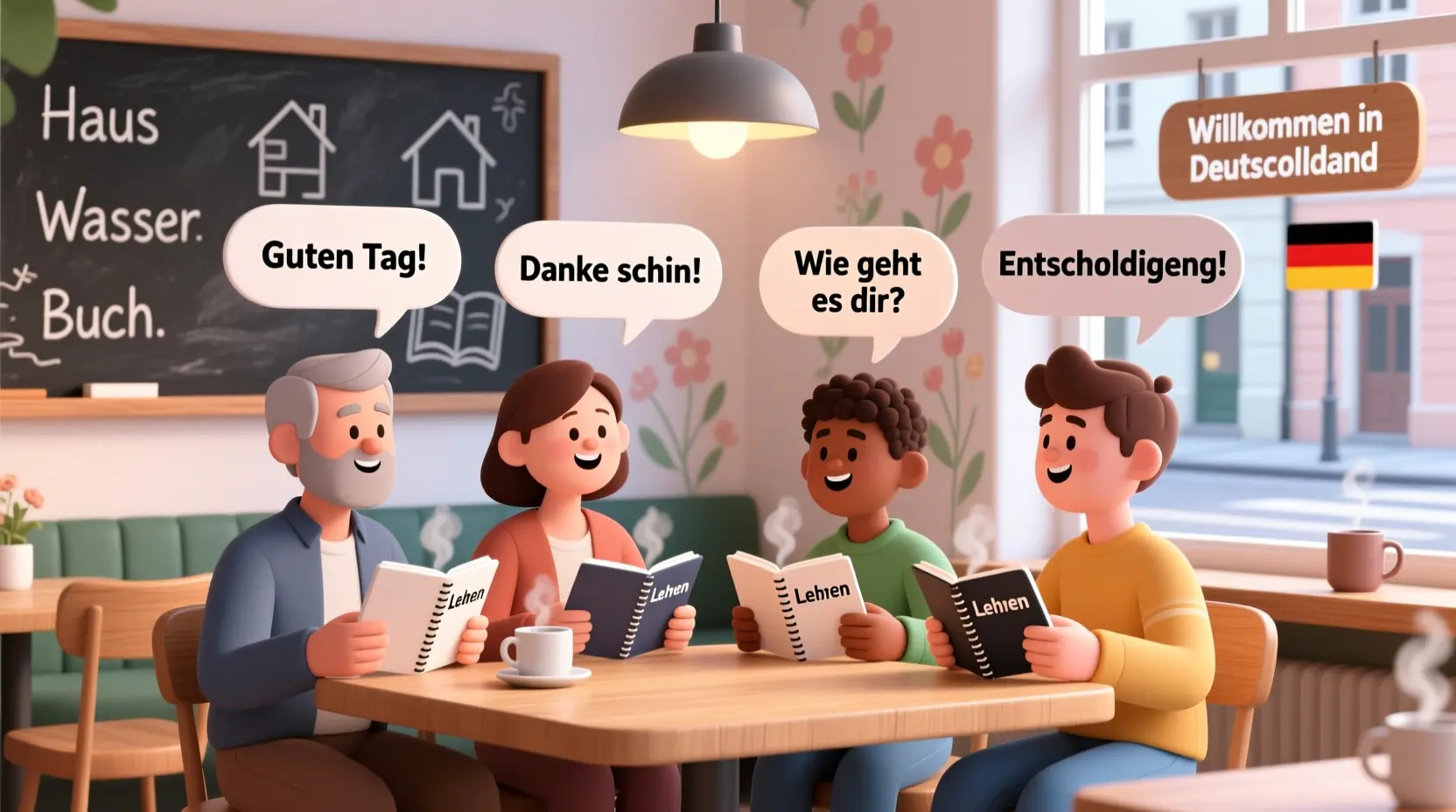
Learning German phrases for beginners is one of the fastest ways to feel confident when talking to native speakers.
You don’t need to know hard grammar or long vocabulary lists.
You only need simple words and phrases that help you greet people, ask questions, travel, order food, and connect with others. These small steps make a big difference.
When you learn these beginner-friendly phrases, you remove fear and replace it with excitement. You understand people better.
You respond faster. You feel more comfortable in real-life conversations.
This guide gives you clear phrases, easy meanings, and examples you can use today.
Why It Matters 🧩
Knowing German phrases for beginners makes daily life smoother. Imagine landing in Berlin and needing directions. Or ordering food in Munich. Or greeting someone politely in Vienna. These small moments create a strong need for basic communication.
Simple German phrases help you:
- Start conversations
- Ask for help
- Understand signs and instructions
- Express needs without stress
- Build confidence as a new learner
Real example: When a beginner says a simple phrase like “Ich brauche Hilfe” (I need help), people respond kindly because you’re trying. These phrases show respect for the culture and make your journey easier and more enjoyable.
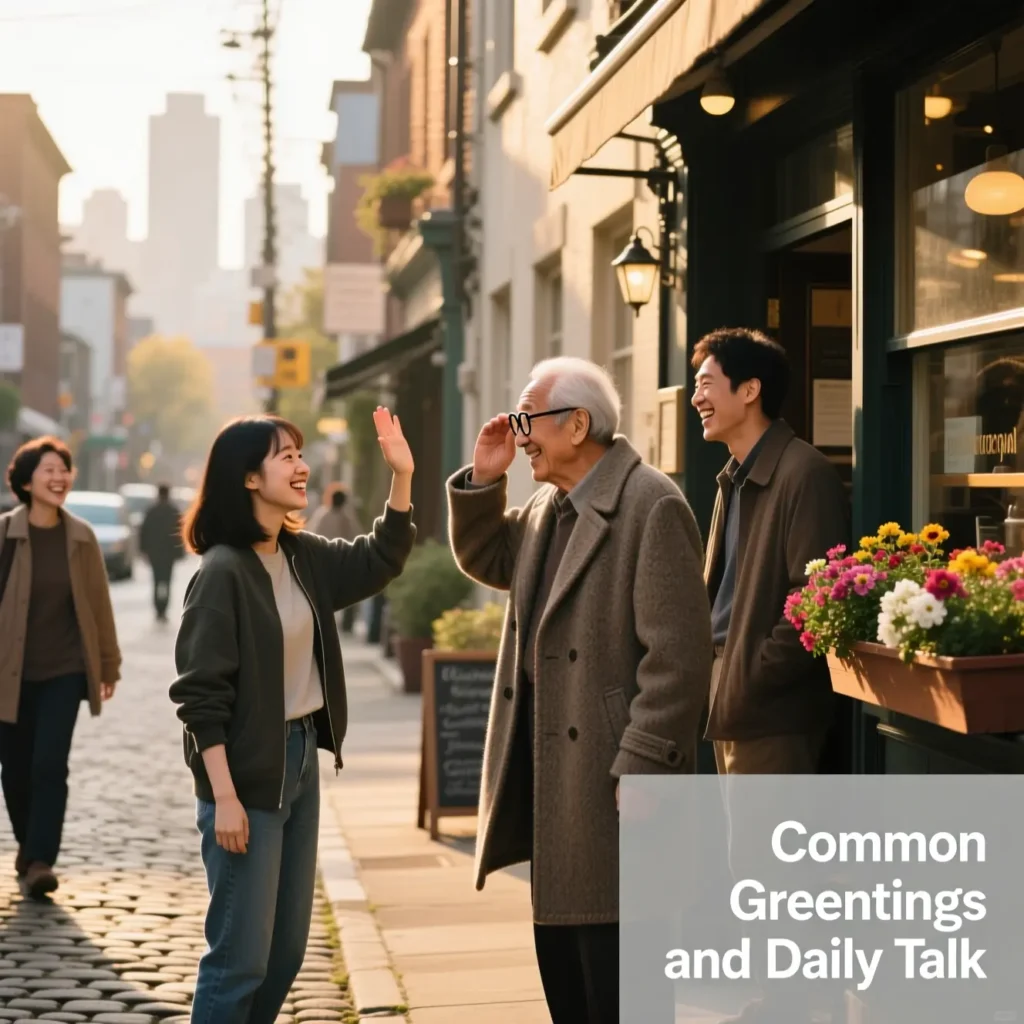
Common Greetings and Daily Talk 👋
Hallo
Meaning: A simple and friendly way to say hello.
Use When: Greeting anyone in casual situations.
Example: “Hallo! Wie geht’s?”
Guten Morgen
Meaning: Good morning.
Use When: Speaking before lunchtime.
Example: “Guten Morgen! Schlaf gut?”
Guten Abend
Meaning: Good evening.
Use When: Greeting someone after sunset.
Example: “Guten Abend! Schön dich zu sehen.”
Wie geht’s?
Meaning: How are you?
Use When: Starting friendly conversations.
Example: “Wie geht’s? Alles gut?”
Essential Travel Phrases ✈️
Wo ist…?
Meaning: Where is…?
Use When: Asking for directions.
Example: “Wo ist der Bahnhof?”
Wie komme ich zu…?
Meaning: How do I get to…?
Use When: Navigating cities or towns.
Example: “Wie komme ich zum Museum?”
Ich habe eine Frage
Meaning: I have a question.
Use When: You need help or information.
Example: “Ich habe eine Frage. Wo ist die Bushaltestelle?”
Ich bin ein Tourist
Meaning: I am a tourist.
Use When: People understand you’re new and speak slowly.
Example: “Ich bin ein Tourist. Können Sie langsam sprechen?”
Useful Restaurant Phrases 🍽️
Ich möchte…
Meaning: I would like…
Use When: Ordering food politely.
Example: “Ich möchte Kaffee.”
Die Speisekarte, bitte
Meaning: The menu, please.
Use When: Asking for the menu.
Example: “Die Speisekarte, bitte.”
Haben Sie Empfehlungen?
Meaning: Do you have recommendations?
Use When: You want help choosing food.
Example: “Haben Sie Empfehlungen für vegetarische Gerichte?”
Die Rechnung, bitte
Meaning: The bill, please.
Use When: When you’re ready to pay.
Example: “Die Rechnung, bitte.”
Shopping Phrases 🛍️

Wie viel kostet das?
Meaning: How much is this?
Use When: Asking the price of an item.
Example: “Wie viel kostet das T-Shirt?”
Ich schaue nur
Meaning: I’m just looking.
Use When: You’re not ready to buy yet.
Example: “Danke, ich schaue nur.”
Haben Sie eine andere Größe?
Meaning: Do you have another size?
Use When: Shopping for clothes.
Example: “Haben Sie eine andere Größe in L?”
Kann ich mit Karte zahlen?
Meaning: Can I pay by card?
Use When: Checking payment options.
Example: “Kann ich mit Karte zahlen?”
Basic Emergency Phrases 🚨
Ich brauche Hilfe
Meaning: I need help.
Use When: Any urgent situation.
Example: “Ich brauche Hilfe! Ich habe mich verlaufen.”
Rufen Sie die Polizei!
Meaning: Call the police!
Use When: Serious emergencies.
Example: “Rufen Sie die Polizei! Es gibt ein Problem.”
ch habe mich verletzt
Meaning: I am injured.
Use When: Needing medical help.
Example: “Ich habe mich verletzt. Wo ist das Krankenhaus?”
Wo ist die Apotheke?
Meaning: Where is the pharmacy?
Use When: You need medicine.
Example: “Wo ist die Apotheke? Ich brauche Medikamente.”
Polite Phrases and Good Manners 🤝
Bitte
Meaning: Please.
Use When: Any polite request.
Example: “Wasser, bitte.”
Danke
Meaning: Thank you.
Use When: Showing gratitude.
Example: “Danke für Ihre Hilfe.”
Entschuldigung
Meaning: Excuse me / Sorry.
Use When: Getting attention or apologizing.
Example: “Entschuldigung, wo ist die Toilette?”
Kein Problem
Meaning: No problem.
Use When: Responding to thanks.
Example: “Kein Problem! Gern geschehen.”
Phrases for Simple Conversations 💬
Ich verstehe
Meaning: I understand.
Use When: Showing clarity.
Example: “Ich verstehe. Danke!”
Ich verstehe nicht
Meaning: I don’t understand.
Use When: Asking for help or repetition.
Example: “Ich verstehe nicht. Können Sie wiederholen?”
Langsam, bitte
Meaning: Slowly, please.
Use When: You need someone to speak slowly.
Example: “Langsam, bitte. Ich lerne noch.”
Sprechen Sie Englisch?
Meaning: Do you speak English?
Use When: You need support.
Example: “Sprechen Sie Englisch? Ich bin Anfänger.”
Bonus Recap Table 🔄
| Category | Phrase | Meaning | Example |
|---|---|---|---|
| Greetings | Hallo | Hello | “Hallo!” |
| Travel | Wo ist…? | Where is…? | “Wo ist der Bahnhof?” |
| Restaurant | Die Rechnung, bitte | The bill, please | “Die Rechnung, bitte.” |
| Shopping | Wie viel kostet das? | How much is this? | “Wie viel kostet das?” |
| Emergency | Ich brauche Hilfe | I need help | “Ich brauche Hilfe!” |
| Polite | Danke | Thank you | “Danke!” |
| Conversation | Ich verstehe nicht | I don’t understand | “Ich verstehe nicht.” |
Final Thoughts
Learning German phrases for beginners is your first step to real communication. Start with short, easy sentences.
Use them daily when greeting people, asking for directions, ordering food, or shopping.
The more you use them, the more natural they feel. Keep practicing, stay patient, and enjoy your learning journey. Small phrases open big doors in a new language.

Leave a Reply